
Industrial Access Point Safety: How Self-Closing Safety Gates Prevent Falls at Elevated Work Areas
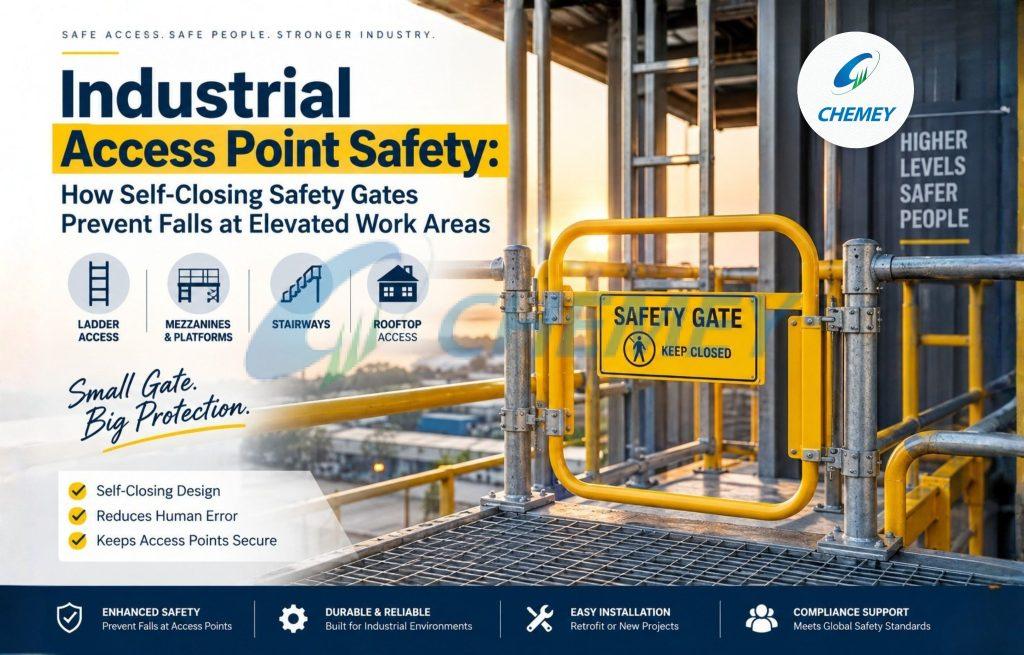
Industrial facilities are designed to move people, equipment and materials efficiently. But every access point between different levels can also introduce a fall hazard. Ladders, mezzanines, platforms, elevated walkways, rooftop access points and maintenance areas often require workers to pass through openings in otherwise protected guardrail systems. This creates an important engineering question: “How can workers safely enter and exit an elevated area without leaving a permanent gap in fall protection?” A properly specified self-closing industrial safety gate can provide a practical form of passive fall protection at these access points. Unlike chains, removable bars or manually operated barriers, a self-closing gate is designed to return to the closed position after a person passes through. What Is an Industrial Safety Gate? An industrial safety gate is a protective gate installed at an opening in a guardrail, platform, ladderway, walkway or other elevated access area. Its primary purpose is to maintain protection while still allowing authorized personnel to move through the access point. Common applications include:• Fixed ladder access• Stairway openings• Mezzanine platforms• Elevated work platforms• Rooftop access• Maintenance platforms• Industrial walkways• Machinery access areas• Restricted areas The gate becomes part of the overall access-protection system rather than simply functioning as a physical door. Why Are Access Points a Critical Fall-Protection Risk? A continuous guardrail can protect an exposed edge effectively—but an opening is still required wherever people need to enter or exit. For example:Guardrail → Access Opening → Ladder → Lower Level If the access opening is left unprotected, a worker approaching the ladder may be exposed to a fall hazard. This is why access-point protection needs to be considered as part of the complete fall-protection design. Self-Closing Safety Gates vs Manual Barriers One of the biggest advantages of a self-closing gate is that it helps reduce dependence on worker memory. Consider a conventional access opening protected by:• A chain• Removable pipe• Manual barrier• Swinging bar• Temporary barricade A worker may move the barrier and forget to replace it. That creates a new exposure. A self-closing gate is designed to return to its closed position automatically. Simple safety principle:Open for access → Worker passes → Gate returns to closed position. Where Should Industrial Safety Gates Be Used? 1. Fixed Ladder AccessFixed ladders are common in manufacturing plants, warehouses, rooftops, process plants, utility areas and industrial maintenance zones. 2. Mezzanine PlatformsMezzanines provide valuable additional floor space in warehouses and manufacturing facilities. Their exposed edges and access points require appropriate protection. 3. Elevated Work PlatformsMaintenance and production equipment often requires workers to operate from elevated platforms. Access openings may occur at stair entrances, ladder transitions, equipment access points and maintenance walkways. 4. Rooftop Access PointsIndustrial rooftops increasingly contain HVAC equipment, solar installations, exhaust systems, electrical equipment and communication systems. Workers may need regular access for inspection and maintenance. 5. Industrial Walkways and PlatformsIndustrial walkways often connect different operating areas. Where a walkway terminates at an elevated platform or equipment access point, a properly designed gate can help control movement and maintain protection. What Are the Benefits of Self-Closing Safety Gates? 1. Passive Fall ProtectionA self-closing gate provides protection without requiring the worker to manually replace a barrier after every passage. 2. Reduced Human-Error RiskA self-closing mechanism is designed to return to the protected position automatically. 3. Easy InstallationModular safety gates can be designed for quick installation using suitable clamping or mounting arrangements. 4. Retrofit FriendlyIndustrial facilities often need to improve existing access points without replacing the entire guardrail system. Modular gates can be useful for plant upgrades and retrofit projects. 5. CustomizableImportant factors can include opening width, mounting arrangement, gate height, pipe diameter, guardrail configuration, material and environmental conditions. Safety Gate vs Guardrail: What’s the Difference? A guardrail primarily protects an exposed edge or boundary. A safety gate protects an opening within or adjacent to a guardrail while allowing controlled passage. Therefore, they are not normally competing products. They work together. Guardrail = protects the edgeSafety gate = protects the access opening This integrated approach creates a more continuous fall-protection system. Safety Gate vs Chain or Removable Barrier For frequently used access points, a permanently installed self-closing gate can offer operational advantages over temporary or manually replaced barriers. Key comparison:• Automatic closing: Self-closing gate — Yes, chain/removable barrier — usually no• Continuous protection: Self-closing gate — better suited, chain/removable barrier — depends on user behaviour• Frequent access: Self-closing gate — suitable, chain/removable barrier — can become inconvenient• Human-error dependency: Self-closing gate — lower, chain/removable barrier — higher• Retrofit potential: Both can be retrofit depending on application The correct choice should always be based on the specific hazard, applicable regulations and facility operating conditions. How to Choose the Right Industrial Safety Gate Before specifying a safety gate, engineers and safety managers should evaluate several factors. 1. Measure the Clear OpeningMeasure the rail-to-rail clear opening where the gate will be installed. 2. Identify the Access TypeDetermine whether the gate is protecting ladder access, stair access, platform opening, rooftop access, walkway, machinery access or a restricted area. 3. Check the Existing GuardrailConsider post diameter, post shape, guardrail height, available mounting space, opening width and gate swing direction. 4. Consider the EnvironmentIndustrial environments can expose equipment to moisture, UV radiation, chemicals, dust, salt air and temperature changes. Material and finish should be selected according to the operating environment. Engineering and Compliance Considerations Safety gates should never be selected simply because they physically fit an opening. The complete system should be evaluated against relevant regulations and engineering requirements. Requirements vary by country, facility type and application, so project teams should verify the applicable local regulations and standards before specification. Compliance should be evaluated for the complete application—not just the gate itself. The guardrail, gate, opening, platform, ladder and access arrangement should work together as one safety system. Why Passive Protection Matters in Modern Industrial Safety Modern safety engineering increasingly considers human factors alongside mechanical performance. Workers may be under time pressure, carrying tools, performing repetitive maintenance, working in poor weather, moving between multiple access points or
Industrial Fall Protection Systems: The Complete Rooftop Safety Guide
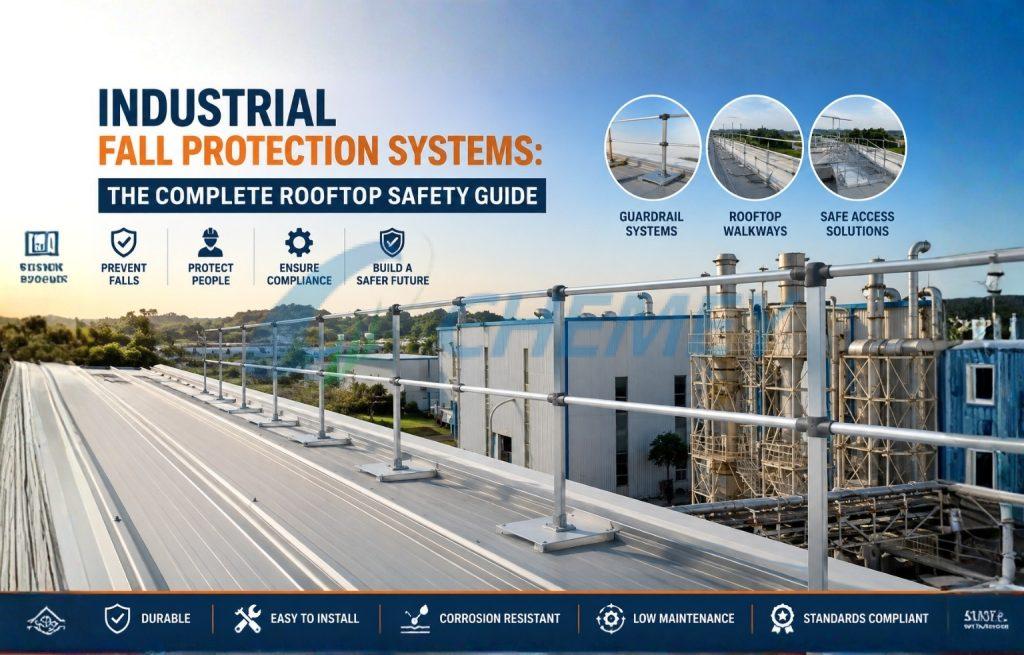
Industrial fall protection systems are critical for preventing workplace falls and ensuring safe roof access across manufacturing plants, warehouses, industrial facilities, commercial buildings, and energy infrastructure. Falls from height continue to be a major cause of workplace injuries, making rooftop fall protection systems a priority for organizations focused on worker safety, OSHA compliance, and operational efficiency. From HVAC maintenance and solar panel servicing to equipment inspections and facility management, workers regularly perform tasks in elevated environments where fall hazards are present. Implementing engineered industrial fall protection solutions helps reduce risks, improve productivity, and create safer working conditions. What Are Industrial Fall Protection Systems? Industrial fall protection systems provide engineered safety solutions that protect workers operating at heights and help minimize fall-related incidents. These systems establish safe access routes, secure work zones, and protective barriers around rooftop hazards. Common industrial fall protection solutions include: Unlike personal fall arrest equipment, many rooftop safety systems provide passive fall protection, allowing workers to remain protected without relying on harnesses or additional actions. Why Rooftop Safety Systems Matter Industrial rooftops often contain HVAC equipment, solar installations, communication systems, and maintenance infrastructure. Without proper roof safety systems, workers face serious risks from unprotected roof edges, skylights, slippery surfaces, and roof access points. A comprehensive rooftop fall protection strategy helps organizations: Essential Components of an Industrial Fall Protection Strategy Rooftop Guardrail Systems Rooftop guardrail systems are among the most effective forms of passive fall protection. They create a continuous physical barrier around roof edges and hazardous areas, providing reliable worker protection. Aluminum safety guardrails are widely used because of their corrosion resistance, durability, and low maintenance requirements. Rooftop Walkway Systems Rooftop walkway systems create designated access routes to rooftop equipment and maintenance areas. These systems improve worker safety, reduce slip and trip hazards, protect roofing materials from damage, and enhance site organization. Self-Closing Safety Gates Self-closing safety gates are installed at ladder openings, roof hatches, elevated platforms, and access points. They automatically return to a closed position after use, maintaining continuous fall protection and reducing the risk of accidental falls. Access Platforms Access platforms provide secure and stable working surfaces for inspections, maintenance, servicing, and repair activities. They improve accessibility, increase worker efficiency, and help eliminate risks associated with difficult-to-reach areas. Benefits of Industrial Fall Protection Systems Implementing industrial rooftop safety solutions provides long-term operational and safety advantages, including: Organizations that invest in engineered fall protection systems often experience fewer operational disruptions, stronger safety cultures, and improved facility management outcomes. Why Choose Chemey for Industrial Safety Solutions? Creating a safer workplace requires proven rooftop safety systems and engineered fall protection solutions. Chemey provides advanced industrial safety products, including EnduRail® rooftop guardrail systems, rooftop walkway systems, self-closing safety gates, access platforms, and customized fall protection solutions designed for modern industrial environments. With a commitment to safety, engineering excellence, and long-term durability, Chemey helps organizations reduce fall hazards, improve roof access safety, and maintain safer workplaces. Conclusion Industrial fall protection systems play a critical role in preventing falls, improving rooftop safety, and supporting workplace compliance. Rooftop guardrail systems, rooftop walkway systems, self-closing safety gates, and access platforms provide effective protection for workers operating at height while improving maintenance efficiency and operational performance. Chemey is a trusted provider of industrial fall protection systems and rooftop safety solutions, delivering innovative products such as EnduRail® safety railings, rooftop walkway systems, self-closing safety gates, and customized access platforms. With a focus on workplace safety, durability, and engineering excellence, Chemey helps organizations create safer, more productive work environments. Contact Chemey today to find the right rooftop fall protection solution for your facility. FAQs What are industrial fall protection systems? Industrial fall protection systems are engineered safety solutions that prevent falls and protect workers operating at elevated heights through guardrails, walkways, safety gates, and access platforms. Why are rooftop guardrail systems important? Rooftop guardrail systems provide continuous passive fall protection by creating a physical barrier around roof edges and hazardous areas, reducing fall risks without relying on worker action. What are rooftop walkway systems used for? Rooftop walkway systems create safe access paths to rooftop equipment, reduce slip hazards, protect roof surfaces, and improve worker mobility. Where should self-closing safety gates be installed? Self-closing safety gates should be installed at ladder openings, roof hatches, mezzanines, elevated platforms, and rooftop access points to maintain continuous protection. Why choose Chemey for rooftop safety solutions? Chemey offers engineered industrial fall protection systems, rooftop guardrails, walkway systems, safety gates, and access solutions designed to improve workplace safety, compliance, and operational efficiency.
Top 5 Ways to Enhance Fall Safety on Your Warehouses and Shop Floor
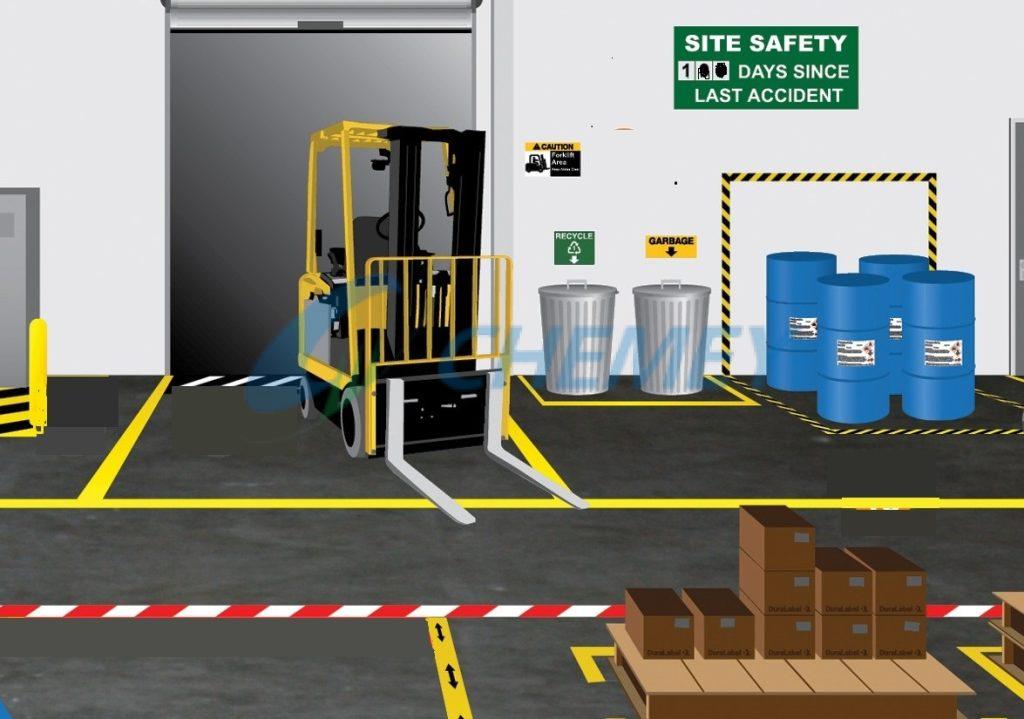
As your workshop or warehouse grows—whether through new equipment, an expanding workforce, or increased activity—so do the risks, particularly those related to ground-level falls. But fear not! With a few smart strategies and the right safety measures, you can keep your team safe and your operations smooth. This blog explores five effective strategies to mitigate these risks, focusing on modular railing, access control gates, and other critical fall protection devices. Here’s how. Understanding Ground-Level Fall Protection Before we get into the nitty-gritty, let’s discuss the often-overlooked dangers lurking at ground level. Sure, we think of fall hazards as high-up issues, but many fall-related injuries occur right at our feet. The risks are real—and preventable—from machinery and lifting operations to stacked materials and unsecured tools. Common Ground-Level Fall Hazards Here are some of the usual suspects: Stacked Materials: Elevated or not, these can be dangerous if improperly managed. Forklift Operations: A slip, a trip, or a misplaced tool can lead to disaster. Unsecured Tools: Anything loose above can quickly become a hazard below. Machinery: Risky operations may lead to lacerations, electrocution, etc. Lifting Operations: Suspended equipment and materials pose serious threats. Remember, fall hazards aren’t just about heights. Tripping, slipping, and falling objects are issues you can’t afford to ignore. Top 5 Tips to Boost Fall Safety on the Shop Floor #1: Don’t Overload Storage Areas While keeping workers safe is the top priority, preventing falling objects is just as crucial. The secret sauce? Effective material storage management. Here’s how to do it right: Avoid overcrowding: Keep storage areas spacious and clutter-free. Secure your items: Make sure everything is firmly in place. Stay organized: A tidy space is a safe space—no tripping over loose materials here! #2: Enhance Mezzanine Access and Security Mezzanines offer great storage solutions, but they need to be secure without becoming inaccessible. Here’s how to strike the balance: Follow OSHA requirements: Safety first, compliance always. Clear the area: Keep mezzanine surroundings free of obstacles. Smart storage placement: Keep storage zones away from entry points. Modular guardrails: These should be customizable and adaptable as your needs evolve. Invest in Pallet / Mezzanine gates: One side open at a time for controlled access. #3: Guard Machines Without Sacrificing Accessibility Protecting machinery shouldn’t mean blocking access for those who need it. Here’s how to safeguard your equipment without slowing down operations: Modular railing: Customizable and easy to install, this is your best friend. Self-closing safety gates: Vertical lift gates are ideal for tight spaces. Strategic machine placement: Keep dangerous equipment out of high-traffic zones and consider remote-operated options with built-in safety features. #4: Identify Machine Hazards Like a Pro Effective machine guarding starts with a sharp eye and a solid understanding of OSHA standards. Watch out for: Exposed moving parts: These can lead to serious injuries if not properly shielded. Sharp components: Anything that can cut, pierce, or crush needs guarding. High-voltage areas: Exposed wiring is a no-go. Unsecured machines: Bolting down equipment is essential. Always know where the power shut-offs are and never block critical access points with barriers. #5: Tackle Spills and Slip Hazards Head-On Spills and slippery surfaces are a leading cause of falls, but they’re entirely preventable. Keep an eye on: Oil slicks: Mobile machinery can leave these in its wake. Dust and debris: Cutting or grinding equipment can create slippery particulates. Unanchored mats: These can be a hidden danger if not properly secured. Chemical spills, Particularly in processing areas. Condensation: Particularly around machines and cold storage. Implement strict cleaning protocols and ensure well-maintained surfaces to minimize slip hazards. A Safer Shop Floor Starts Here Fall protection isn’t just for those working at heights—it’s essential at every level of your work. From smart storage practices to vigilant maintenance, these tips will help you to create a safer environment for everyone. Would you like to know more about emerging technologies and trending solutions for fall protection when working at heights or Safety on the Shop Floor? For more information, call +91 9099033719 or send an e-mail to contact@chemey.com
Mitigating Fall Hazards in Oil & Gas Refineries: The Critical Role of Self-Closing Safety Gates
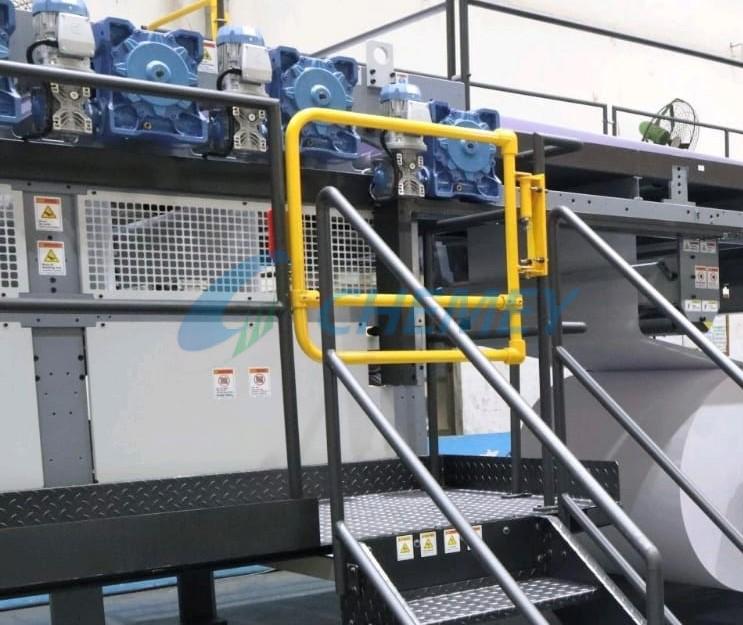
Oil and gas refineries are complex environments filled with elevated platforms, catwalks, and open areas, making fall protection a paramount concern. While harnesses and lifelines are essential, an often overlooked yet crucial element is using self-closing safety gates to secure access points and prevent accidental falls. The Unique Challenges of Refinery Fall Protection: Why Self-Closing Safety Gates Are a Game-Changer: Self-closing safety gates are particularly useful in many areas or operational needs. These include: Features and benefits of EnduGate self-closing safety gates CHOOSE OSHA-COMPLIANT SAFETY GATES TO MITIGATE FALL HAZARD Don’t leave fall protection to chance. Investing in self-closing safety gates is a proactive step towards creating a safer refinery environment. Contact Chemey today to learn how our safety gate solutions can help you protect your workers and prevent falls. call +91 9099033719 or send an e-mail to contact@chemey.com
Make Sure Your Workplace Is Up To OSHA Compliance on Fall Safety
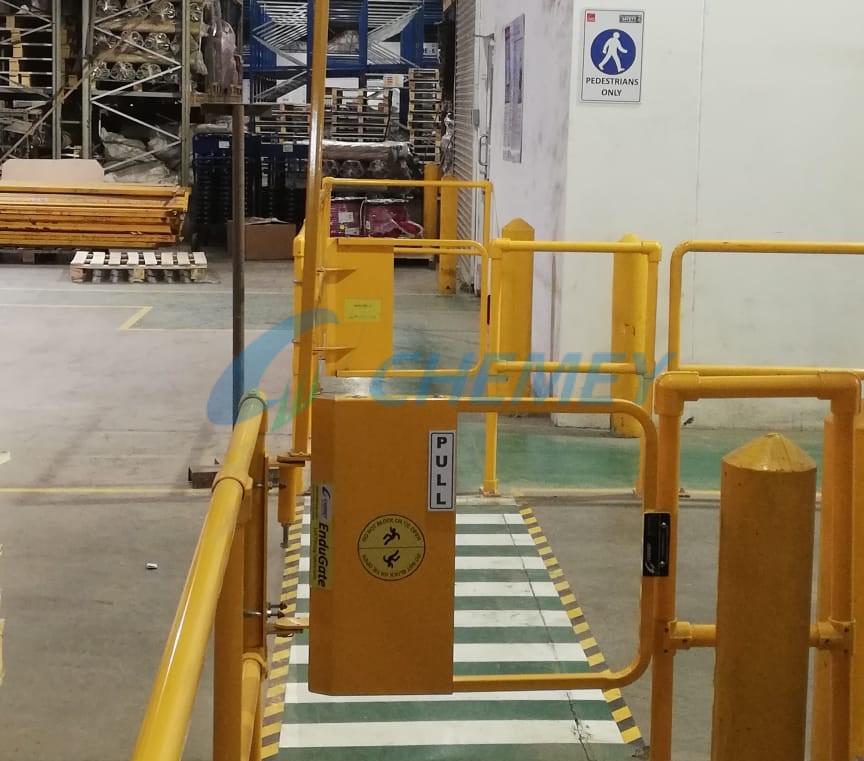
The effects of the COVID-19 pandemic impacted every industry. Now that the economy has seen a significant rebound, manufacturing and oil & gas production are in full swing again. Safety measures are critical now more than ever, and particularly those pertaining to fall safety. While addressing the danger of falls is critical in all workplaces, it’s a particular concern in chemical, oil/gas refinery, cement, and many other heavy manufacturing facilities. Continuous process facilities are bustling, structurally complex, and full of hazards subject to a variety of Safety regulatory requirements. There is dangerous equipment on-site, regular shipping and receiving through busy loading docks, and many elevated areas where fall risks are more present. WHAT MAKES FALL SAFETY SO IMPORTANT? Every accident has many consequences, the most important being that no employer wants to see workers hurt. Lack of safety compliance mean a potential work shutdown, and lost profits. Every slip, trip, and fall adds up to millions of lost workdays in a year. The independent survey estimates that about 20 percent of worker injuries in industry are due to slips, trips, and falls. Proactively creating and supporting a culture of safety in your workforce is vital, but simply reminding workers to watch their step is not enough. Fall protection equipment, including specialized pieces such as an adjustable safety gate or swing gate, is essential for ensuring worker safety and keeping production moving. To help you to understand and implement proper fall protection, let’s examine the top fall risk areas in industry/refinery facilities, then consider if your company has fully addressed each of those risks. AREAS OF FALL RISKS IN WORKPLACES A Manufacturing industry/ Refinery includes several important areas which present fall hazards. Regulations do not always specify which equipment you are required to use in each situation. But OSHA guidelines provide requirements that the gates and other equipment you choose must meet in each area: LADDERSLadders, either portable or affixed, are a common fall safety risk which OSHA addresses under 1910.23 – Walking-working Surfaces: Ladders. Each employer must look at situations where ladders are being used and identify the fall hazard associated with it. For example, fall protection is usually not required for a step ladder, but it will be if that step ladder is used on an elevated platform or in an area adjacent to an unprotected edge. Fixed ladders, like those commonly used in oil refineries, also need fall protection, like guardrails fitted with an industrial safety swing gate to provide access control and fall safety. ROOFTOPS AND ROOF ACCESS AREAS Workers may need to access your rooftop for maintenance, cleaning, or to perform work on rooftop machinery. Skylights, roof edges, and even stairways require protection to properly manage rooftop access. The railing and safety swing gate that protect each of these areas must have a height of 1050mm (plus or minus 75 mm) from the walking/working surface that they’re installed on. They must be capable of withstanding 90 kg of downward force upon the top rail without failure. They also require a smooth-finished surface that can’t snag worker’s skin, clothing, or equipment. You should also look at options which are non-penetrating, allowing you to place well-anchored gates and railings without damaging the integrity of your rooftops. LOADING DOCKSLoading docks are another busy area in a manufacturing plants / oil & gas refinery, and thus, another fall safety hazard. Fall protection for a loading dock usually comes in the form of a self-closing, adjustable loading dock safety gate system and thorough training of personnel, ensuring risk mitigation at a busy dock. The height and strength requirements for railings and gates in loading dock areas are the same as those for rooftop areas (see above). STAIRWAYSWhen a door or a gate opens on a stairway, there is a platform and the gate’s swing doesn’t interfere with workers on the stairs. An outdoor or indoor swing gate is ideal for this situation. Stairs must also be kept well-lit, dry, and free of debris, allowing maximum safety to workers as they move between the levels of your manufacturing/processing areas. MEZZANINESThe extra storage space created by these elevated platforms is extremely useful in many facilities, but they also present falling hazards. The same strong railing and safety gate requirements for roofs apply to mezzanines, and toe boards may also be required to help prevent small objects from falling into work areas below. Specialized pallet safety gate made for mezzanine use are your best option for access to these areas MACHINERY GUARDINGSafety swing gates are a great tool for controlling access and preventing falls around or onto the potentially dangerous machinery in your facility. They can also help keep unauthorized personnel out of restricted processing areas, improving plant security and protecting trade secrets. WHY SAFETY GATES MATTER The right safety gates will help employees, visitors, and contractors within your facilities to perform their function without fall and safely access the areas they need to. As outlined above, your facility has many areas with potential fall hazards, and the right Industrial safety gate choice can make the difference between being ready for a return to full production without struggling with safety problems. WHY SAFETY GATES ARE SUCH AN IMPORTANT SAFETY CONSIDERATION Simply put, Safety Swing Gates are the simplest, most effectively way to safely control access to the many areas in your facility, and to protect personnel from the fall risks they may encounter in each area. OSHA compliant safety gates keep workers safe on elevated areas and at the openings of stairways, ladders, mezzanines, and loading docks. There are many different types of OSHA-compliant gates with a specific purpose. Self-closing safety gates are passive fall protection, designed to automatically close every time the gate swings open. There is no risk of a worker forgetting to close the gate behind them. The equipment offers nearly continuous protection from leading edges. These gates are easy to mount in various positions and on handrails of all sizes. CHOOSING A GOOD SAFETY PARTNER Your worker