
Protecting Elevated Spaces In Manufacturing Facilities & Warehouses : Ladder Safety Gates
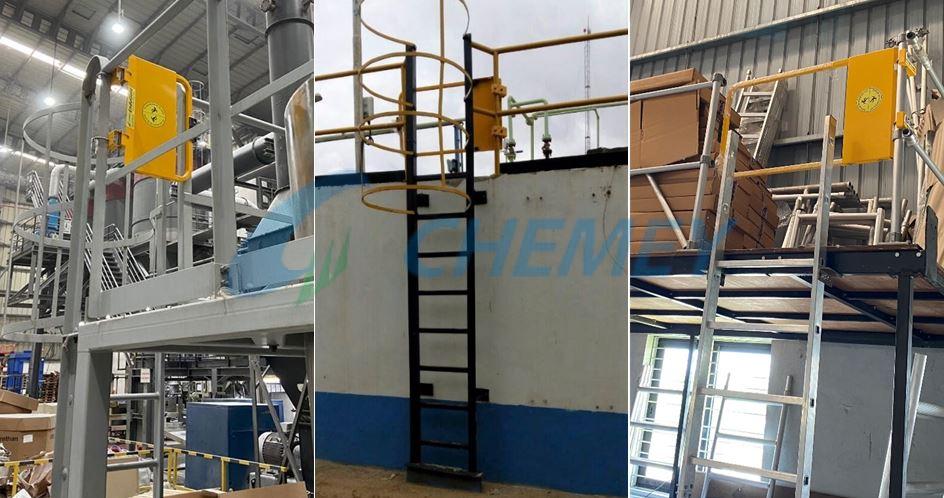
Ladders are essential in any workplace facility that uses elevated work planes, storage areas, and walkways to maximize the usable space of the facility. Most ladders used for this purpose are fixed ladders. They are permanently attached to a mezzanine, catwalk, part of the equipment, or the building itself. To comply with OSHA fall protection guidelines, there are several steps you can take to protect workers utilizing fixed ladders. Anytime workers have to climb a fixed ladder, especially when also carrying tools, equipment, or other items, there’s a risk of falls. They must be protected from falling into a ladderway employing a self-closing safety swing gate, ladder safety gates, or guardrail offset to guide employees away from the dangerincluding installing an integrated ladder safety system, providing fall arrest systems, and maintaining fixed ladders properly. OSHA 1910.23 (d) insists following for Fixed Laddersused anywhere in your facility: Ladder steps or rungs must be evenly spaced, so workers aren’t exposed to undo fall risk. Steps or Rungs must have a non-slip surface to protect employees. Fixed ladders must be strong enough to handle their maximum intended load without failing. You must keep ladder steps or rungs clear of debris and other fall hazards. Specific OSHA Fall Protection Device Requirements for Fixed Ladders A few things you should know about Fixed Ladder Fall Protection Equipment:You understand that there are serious fall hazards associated with the fixed ladders in your facility. You also need to be very careful to follow the standards for the fall protection equipment you choose which include : Ladder Safety System Ladder climbing safety systems are permanent vertical lifeline systems, that can be comprised of cable or rail. Eachfixed ladder is equipped with a ladder climbing safety system, all components must meet OSHA 1910.29(i) requirements. The ladder climbing safety system should be inspected before use and periodically based on the manufacturer’s requirements. Any worn, damaged, or otherwise, defective equipment should be taken out of service immediately. Personal Fall Arrest System This type of system is designed to stop a fall and absorb the energy before the worker comes into contact with a lower level. A typical personal fall protectionequipment consists of a full-body harness, connectors, and anchorage. It’s also imperative that the system is inspected before use regularly based on the manufacturer’s requirements, for any signs of damage or wear. Any piece of equipment that fails inspection or has been impacted, shall be removed from service immediately. Ladder Safety Gates Protecting the entrance of a ladderway is key to preventing falls in your facility. One way to do this is with swing gates that attach to the guardrail system used to protect the elevated surface the ladder leads to. A self-closing gate is a preferred method of protecting ladder entrances in most facilities. Ladder safety gates and other types of the self-closing gate must meet the general requirements per OSHA 1910.29.Whether you’re running a busy warehouse or a manufacturing facility, you need to take full advantage of every square inch of space you have. That means elevated platforms, mezzanines, catwalks, and other work areas. While you may have guardrails installed around the perimeter, your workers still need access to the space, and it’s up to you to keep them safe as they climb those fixed ladders. Fixed Ladder Fall Protection Begins with Training No matter how many Industrial safety swing gates or other safety devices you install or provide, mistakes can still lead to falls. That’s why it’s vital that you provide adequate fall prevention training for incoming employees as well as ongoing training for all members of your organization. For fixed ladders, it’s important to teach workers to: Always face the ladder. Maintain three points of contact whenever climbing a ladder. Inspect rungs or steps before use for signs of dampness or anything slippery. Inspect the fall arrest system or ladder safety system for signs of damage. Properly secure the body harness, lanyard, and lifeline, Enter and exit the ladder entrance through a self-closing swing gate- Chemey EnduGate Never over-extend/stretch yourself to the side of the ladder. Do not carry loads that can cause a loss of balance on a fixed ladder. Government authorities are very strict when it comes to requiring employers to compliance standards and regulations. However, they’re not inclined to give specific advice about which safety device or system you should use in a given situation. For that, you need a qualified safety expert like the specialists at Chemey. We’ve been a leading manufacturer of passive fall protection products, specializing in safety gates, Pallet Safety Gates for more than 5 years. Put our safety equipment expertise and industry experience to work for you to protect your employees from fall hazards in your facility and maintain your compliance. Need help? We have a team of professionals that can help you sort through each of these questions to find the right solution for you. Follow US On Facebook | Instagram | Linkedin | Twitter
Basics of Fall Protection Rules
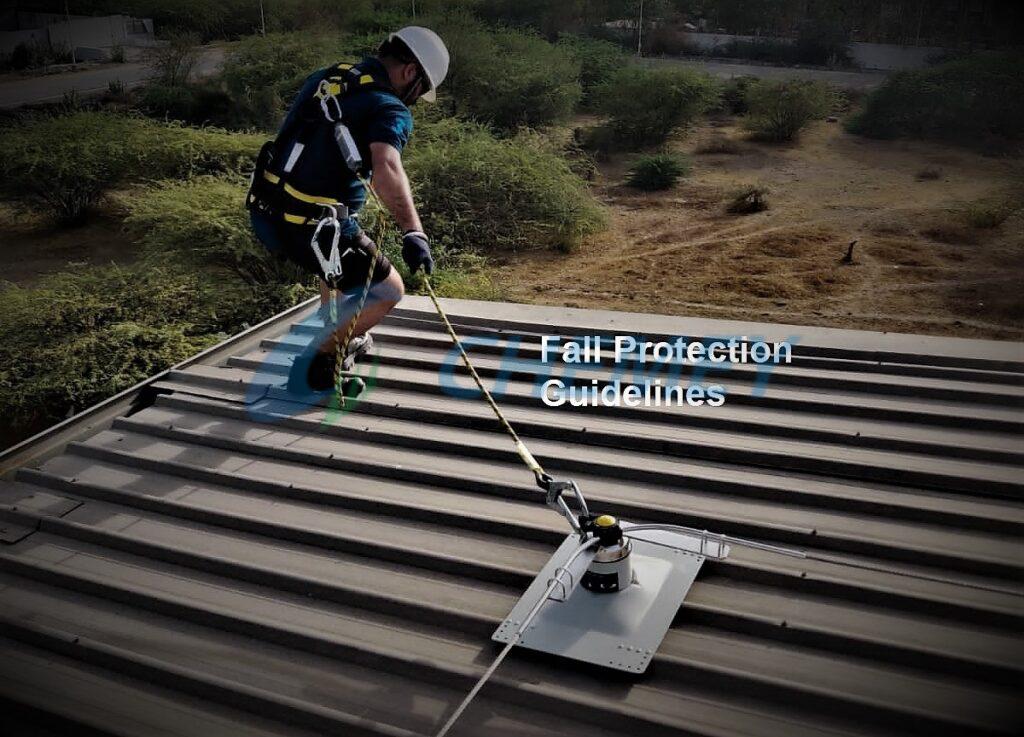
With falls being one of the most common causes of workplace injuries and deaths, workers who work at heights must understand the basics of fall protection. Being proactive by implementing compliant methods of fall protection and fall prevention can save lives and prevent injuries. Consequently, it is important to be aware of basic fall protection rules and facts. Here are some basic fall protection facts to consider. (1) Identify Fall Hazards Falls occur due to various reasons including losing balance, tripping, losing a grip on support, stepping backward, strong winds or dangerous weather, stepping into a hole, support moving or breaking, and irregular or damaged work surfaces. Employers can be proactive in reducing workplace injuries and deaths by identifying and eliminating fall hazards and installing fall protection systems. Further, employers can educate workers to follow safe practices, properly use equipment, and be proactive and aware of fall hazards. (2) Utilize Fall Protection Systems Three categories of fall protection systems include fall prevention, fall restraint, and Fall arrest. Fall Prevention A fall prevention system aims to prevent falls from occurring by using guardrails and barriers. Consider guardrail systems such as non-penetrating guardrail systems, permanent rail systems, and customized guardrail solutions. Barrier considerations include industrial safety gates, skylights, and warning lines. Fall Restraint A fall restraint system stops workers from falling by using a tether that restrains a worker’s range of motion. The worker is not allowed to move far enough to reach a leading edge. Fall Arrest A general fall arrest system is a net or cushion system beneath a working area. A personal fall arrest system is composed of an anchorage connector, body wear, and connecting device. Such a system allows a worker to fall a short distance before stopping their fall. (3) Comply with OSHA Guidelines OSHA provides information about how to protect workers from falls, such as using guardrails, safety gates, personal fall protection systems,mobile work platforms, Aluminum mobile scaffolds, adopting safe work practices, and providing appropriate training. In some situations, protection is provided by “limiting the number of workers exposed” to falls by using warning lines, designated areas, and control zones. Further, OSHA guidelines include the following fall safety practices: Protection is required for workers in construction sites when working above six feet above a lower level and for workers in the general industry when working above four feet above a lower level. Fall protection systems are required to prevent workers from falling into or onto hazardous machines or other equipment regardless of the fall distance. Providing workplace conditions free from known dangers and establishing fall protection systems before work begins. Providing personal protective equipment to workers at no cost to them. Training workers about workplace hazards in a language that they can understand. As you prepare for or review your fall protection program, keep these basic fall protection regulations in mind. While the employer is responsible for ensuring a safe work environment, every worker should make it a priority to become knowledgeable about general fall protection rules. Effective fall protection has two facets: human and equipment. Both make important contributions to worker safety. Fall Protection Equipment Every job site where workers are at heights exceeding six feet should have fall protection equipment in place to prevent falls of any kind. Guardrails must be 42” above walking level, while safety gates must be installed on all openings of approach ued for entry or exit of any working surface, Personal fall arrest systems are used to stop a worker who is falling from a working level. Some of the most important rules to note include: Worker must not free fall more than six feet and must not contact any lower level The system must bring worker to a complete stop The system must be inspected before every use for wear, damage, or deterioration Body belts (safety belts) are prohibited for use as part of a fall arrest system Every worker should have a solid understanding of how personal fall protection devices work. Devices like safety harnesses, lanyards, and lifelines can only work if they are used correctly. Human Role in Fall Protection In terms of the human aspect, workers must be vigilant when working at heights. Workers must be aware of their surroundings and immediately bring any concerns to the attention of a site supervisor. Potential hazards requiring fall protection include: Hoist areas Unguarded holes Ramps, runways, or walkways Excavations Dangerous equipment Wall openings Workers who communicate effectively about their work environment and collaborate to mitigate hazards will lower their risk for falls and height-related incidents.Employer and Employee Responsibilities for Fall Safety Employers must provide training to all employees who work at heights. Employees must take responsibility for participating fully in this training and be sure to ask questions to clarify rules and safety guidelines. Fall protection is a key part of workplace safety, and it’s a team effort. Don’t make the mistake of placing the responsibility solely on your employer—take your safety into your own hands by becoming knowledgeable about OSHA’s fall protection standards, understanding how to safely use fall protection devices, and maintaining awareness of your surroundings at all times.
Guardrails – A popular form of fall protection on rooftop
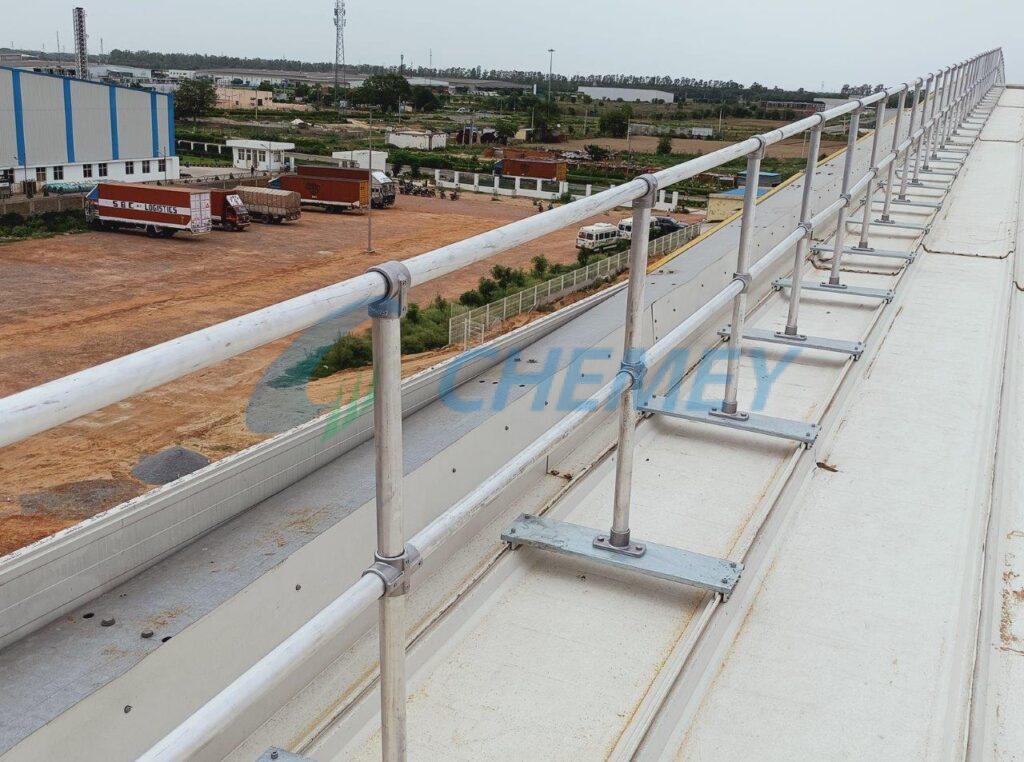
Whenever our customers ask us to recommend a rooftop safety solution, we always follow hierarchy of hazard control to recommend the most appropriate form of fall protection. Avoid working a height or Eliminate hazard by redesigning work practice Prevent falls using collective equipment Restraint falls using personal protective equipment Arrest Fall using personal protective equipment If the hazard cannot be eliminated by redesigning the danger or through changing working practices, then the preferred option is to use collective measures by installing guardrails to protect people working on or accessing workplace roof. But when you start looking at the different types of guardrails and what standards they need to conform to, the decision is not as straight forward as you might assume. What type of rooftop guardrail is best? If you want to protect people working on your rooftop, then you will need a permanent guardrail, as access to the roof will be required several times a year. Many permanent guardrails are fixed directly into the roof structure, and while this will provide suitable protection, these systems do have their drawbacks. For example, drilling holes into the roof to fix the system could void your roof warranty or cause costly water damage if proper care is not take at time of installation. Properly designed and installed guardrail provides strength, stability and safety, and does not require the roof membrane to be penetrated during installation in case of standing seam roof. Which standards should your roof guardrail comply with? It is always preferable to have standards for most fall protection systems.However, when it came to permanent guardrails there was a lot of confusion, especially as existing standards were open to individual interpretation. Roof edge protection was typically designed to comply with one of the following standards: EN 14122-3 standard, which is intended for guardrails around plant and machinery OSHA Standard 29 CFR 1910.29 International Building Code Section 1607.8 EN 13374 2004 Temporary edge protection systems BS 13700:2021 , which is for permanent counter weighted guardrail systems that are not fixed directly to the roof’s structure Installing permanent rooftop guardrail is a wise choice when making your industry a better and safer place to work for your employees. If you are confused that which standard to follow and what railing is safe to install on your rooftop, that makes your employees, workers, inspectors, and managers safe, get in touch with us for Endurail Rooftop Guardrail inquiries.
What does OSHA say on the topic of safety gates
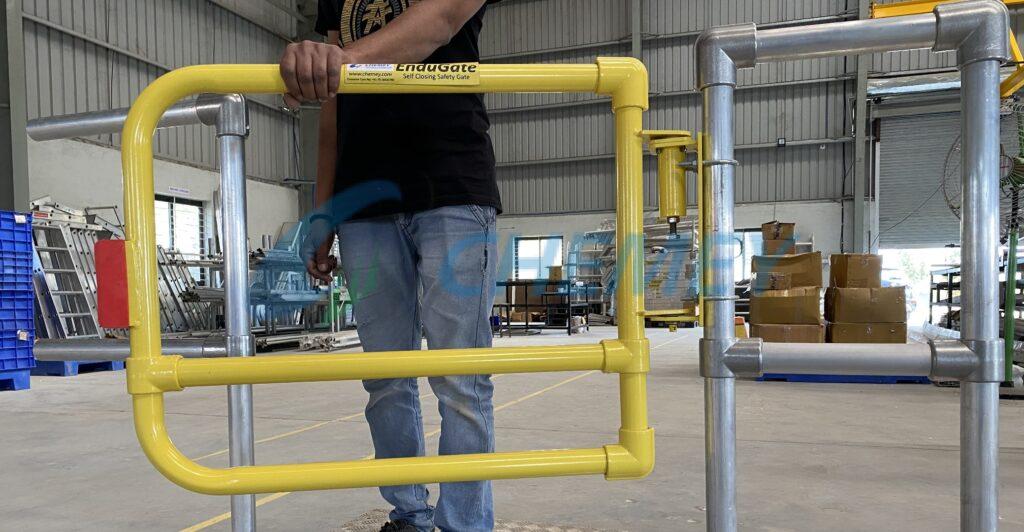
What does OSHA say on the topic of safety gates? Are they required? Industrial facilities can be dangerous places for employees to work. Fortunately, safety managers can greatly reduce these risks by taking the proper safety measures. By installing safety gates and guardrails, employers can minimize OSHA violations, minimize employee injury, and attract top-caliber employees who are committed to following safety protocol. On jobsites, the railing is erected to protect workers from falling – on roofs, on scaffolds, on all types of elevated work areas – without any mechanism to protect those same workers at the edge or floor opening from which they are accessing that work area. Why? How can railings be effective if they don’t offer complete protection? What good does a perimeter railing do if a worker can fall through the hole in which their ladder is situated? Safety gates have been around for a long time, but for a variety of reasons, they are often not used. Sometimes it’s a lack of planning, other times it is lack of knowledge of product availability, and other times maybe it’s cost (though, if you’re spending the money to build or purchase a rail, the addition of a gate is minimal cost-wise). Whatever the reason, workers are being left unprotected and, worse yet, being given a false sense of security. When comparing the revised OSHA standard with the previous, you’ll notice OSHA has added very specific details regarding the use of safety gates. Let’s look at the new safety gate standard, how it affects your business, how to evaluate your current safe access/fall protection configuration, and any needed modifications that help ensure you get your team home safe at the end of each day. So what does OSHA say on the topic of safety gates? Are they required? OSHA’s walking-working surfaces standard has been revised and published. Whether you call them swing gates, safety gates, ladder-way gates, drop bars, or chains, the new OSHA standard is in effect and it’s time to address the changes.The newest OSHA revisions include the following criteria for OSHA 1910.29 (b): “Fall protection systems and falling object protection — criteria and practices.” The employer must ensure guardrail systems meet the following requirements: (13)(i) Has a self-closing gate that slides or swings away from the hole, and is equipped with a top rail and mid-rail, or equivalent intermediate member, that meets the requirements in paragraph (b) of this section; or (13)(ii) is offset to prevent an employee from walking or falling into the hole. (2)(i) Mid-rails are installed at a height midway between the top edge of the guardrail system and the walking-working surface. (2)(iv) Other equivalent intermediate members, such as additional mid-rails and architectural panels, are installed so that the openings are not more than 48 centimeters wide. To provide even more insight, below is a simplified list of some key areas to focus on when evaluating your current conditions. These can be used to help you determine the appropriate course of action in and around any holes, openings, or current access points with or without safety gates. OSHA’s standard requires that a safety gate: Must be self-closing. Must either slide or swing away from the hole. Must be equipped with top rails and mid-rails, or equivalent intermediate members, that meet the requirements in final paragraph (b)(13)(i). Must have a top rail height of 1070 mm, plus/minus 75 mm. May not contain an opening greater than 480mm in the least dimension. Must be able to withstand a 90 kg load (top rail) and 68 kg load (mid-rail). So what exactly do the new revisions mean regarding the use of safety gates? What should you look for when reviewing your current safe access/fall protection configuration? Follow US On Facebook | Instagram | Linkedin | Twitter
What is Slip-on Pipe Fittings?
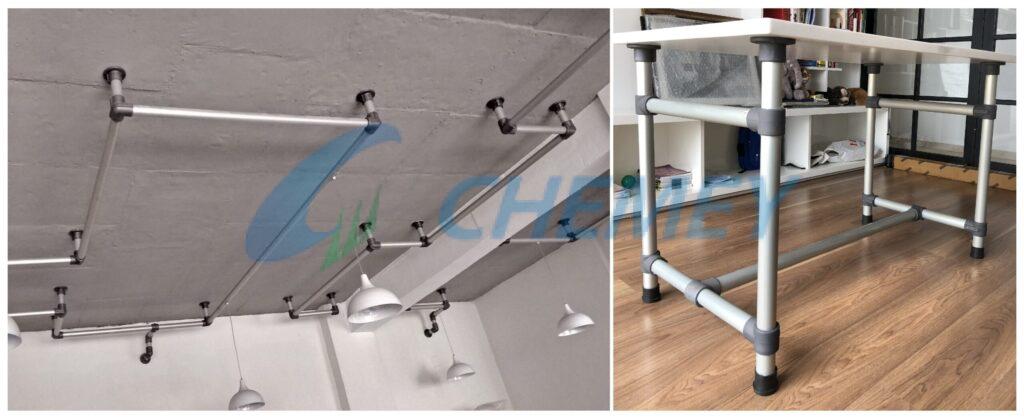
What is Slip-on Pipe Fittings? A contractor needs to consider several things while designing a new construction site. One of them is modular handrailsor Guard rails, and it is one of the essential factors to make your site safe by preventing fall protection from height. So, If you are looking to get a brief understanding of the structural pipe fittings, you are in the right place. What is Slip-on Pipe Fittings? Structural pipe fitting, also known as a slip-on pipe fitting, tube clamp, or pipe clamp is used to build structures such as handrails, guardrails, modular barricades, solar panel support, and other types of pipe or tubular structure. Endurail fittings are the best option for DIY enthusiasts for more creative applications such as bench, coffee table, modular GYM, clothing racks, shelves, and building architectural use. Because of the modular design of standard fittings, assembly is easy without welding or threading and only simple hand tools are required.Moving further, there are endless possibilities to build tubular structures as there are more than 50 types of fittings combined in many ways to create any custom structure. Fittings used are aluminum alloy castings, and come in many styles such as elbows, tees, crosses, flanges, and adjustable fittings. The fittings are not threaded; they simply lock onto the pipe with the supplied hex set screws. The primary advantage of Endurail fittings is their simplicity to use. The fittings slip on the pipe and are usually locked down with a set screw. Through the use of only Allen key when the knurl point set screw is tightened down it locks the fittings into the pipe and a connection equivalent to a weld is created. Don’t let its simplicity fool you into thinking the connection is weak. Endurail fittings are rated for more than 400 kg of pull-out force. This strength qualifies for use in most industrial applications. Other advantages of using structural pipe fittings are: Easy installation and reconfigurable design. Since there are no permanent welds in the structure, the set screws of the fittings can simply be loosened, allowing them to be repositioned The project can be disassembled and stored if needed, or even taken apart with fittings and pipe recycled into a new project. There is no welding, threading, or special permits required when you use EnduRail modular handrail system. To start any handrail project just plan for pipe, fittings, and simple tools. Mark chalk line and base flange positions. Drill anchor hole and start installation by cutting pipes of the required size. EnduRail Handrail advantage for large projects Just plan for Pipe and Fittings No specialized Labor, Permits, or tools No – Welding & Threading while installing. A last-minute change in configuration/location – easy to implement. Quick dismantling while an ongoing project Easy Assembly & Reusability Nicer aesthetic look Widely used in a water-rich environment without the risk of corrosion Can use prefinished powder-coated pipe and fittings – No Painting After Installation for many years Lowest life cycle cost-effective alternative to welded metal rail and brittle FRP railings. Conclusion If you are looking for a variety of fall protection systems in one place, then get in touch with us. We are a leading fall protection solution providing company in Ahmedabad, India. We offered different types of systems used in industries, such as structural pipe fittings, barricades, safety gates, lifelines, and safe access solutions like mobile scaffolding, work platforms, and crossover platforms.Follow US On Facebook | Instagram | Linkedin | Twitter
Are Fall Protection and Fall Prevention Similar?
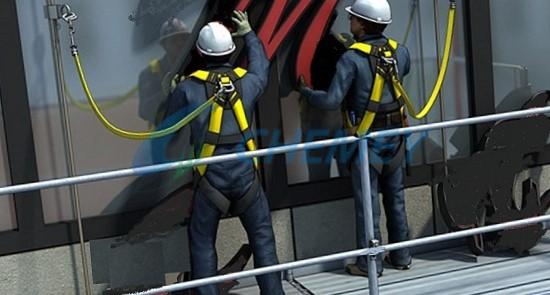
Fall prevention and Fall protection considerations are important in manufacturing industry and construction sites because falls, slips and trips are among the most common causes of work injuries and fatalities. We often use these phrases involving key words “protect” or “prevent” interchangeably. According to a dictionary, protect means “to defend or guard; to keep safe from harm or injury” while prevent means “to keep from occurring; avert, hinder.” What Does OSHA say? OSHA(Occupational Safety and Health Administration) says that 1) To prevent workers from being injured due to falls in general industry, employers must commit to No matter the height, if it is possible for any worker to fall into or onto dangerous areas, employers’ erect guardrails and toe boards to prevent falls and injuries Provide a guard rail and toe board surrounding elevated open sided platforms, floors or runways or a floor hole cover to guard floor holes into which workers could accidentally walk. 2) To protect workers: Employers have a responsibility to protect workers from exposure to serious injury or fatality while working at heights of four feet (general industry) and six feet (construction industry). Furthermore, OSHA requires that should a worker do work over dangerous equipment or machinery, the employer has a duty to provide fall protection. Providing other types of fall protection systems that may be necessary such as safety harness and line, safety gates, mobile work platforms, cross over platforms, stair railings and handrails. According to OSHA fall protection includes fall prevention, fall arrest systems, and measurements for assessing fall hazards and controls. Therefore, it is possible to think of fall protection as a global phrasing which includes fall prevention. What does fall prevention systems include? It includes systems such as (1) Guardrail Systems: Guardrail systems are passive fall protection systems used as a barrier to prevent workers from falling from a work edge to a lower level. Use these systems on various work surfaces such as rooftops, mezzanines, catwalks, etc. In addition, guardrails prevent workers from falling into holes or openings. (2) Safety Gates: Protecting the entrance of a ladderway is key to preventing falls in your facility. One way to do this is with metal swing gates that attach to the guardrail system used to protect the elevated surface the ladder leads to. Protecting personnel working above and working below a mezzanine must be protected without impeding the loading area. A mezzanine safety gate/pallet gate allows access to move materials and yet provide safe restriction to the loading area. Pallet gates open from the outside and allows pallets and other items to enter the mezzanine or platform with a forklift. (3) Barriers or Marking Systems: A hard or expandable barriers is also passive fall protection system. A warning line system includes a chain (rope or wire) and supporting stanchions is an alternative. Place the system around openings or edge of hazards to serve as a warning that workers are approaching a hazard. (4) Fall Restraint Systems: A fall restraint system is a form of active fall prevention system used to prevent falls. Fall restraint systems include using safety belts or full body harnesses which attach a worker to an anchor. Attach a line to an anchor and to the harness or safety belt so that the worker cannot fall off an edge. (5) Hole Covers: Another type of passive fall protection system is a hole cover. One type of hole cover is a skylight screen which provides a physical barrier to prevent workers or materials from falling through the skylight. Consequently, fall prevention includes steps taken to hinder an accidental fall. Employers need to eliminate or limit access to fall hazards and train workers. Fall prevention is an important element in fall protection. Fall Restraint A fall restraint system stops workers from falling by using a tether which restrains a worker’s range of motion. The worker is not allowed to move far enough to reach a leading edge. Fall Arrest Systems Another type of fall protection is fall arrest systems. Fall arrest systems protect a worker after a fall by stopping the fall before the worker hits the surface or hazard below. One type of fall arrest system is a full body harness connected by lanyards or lifelines to a secure anchor. Another type of fall arrest system is safety nets. Conclusion Finally, protecting workers from falls and preventing workers from falls go hand in hand. Whether the preference is to use fall prevention or fall protection, the overall important aspect is worker safety with fewer injuries and fatalities due to falls. We offer various fall protection products including guardrail systems, safety gates, skylights, Barriers, warning lines and keep workplaces safe during routine operation and maintenance.
Fall Protection: Safety Gate Applications
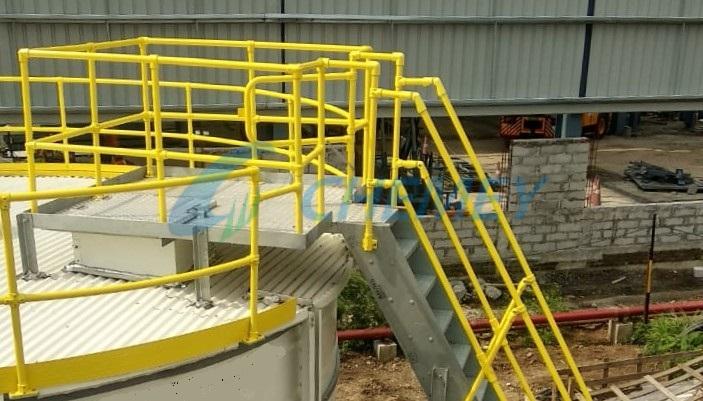
A common cause of industry injuries and fatalities is falls according to OSHA. Because falls are a common cause of injury and death, providing fall protection is important. One consideration for OSHA compliant fall protection is the use of safety gate fall protection. Fall protection safety gates are useful in minimizing fall risks and preventing workplace accidents. To avoid employee injuries and fatalities in the workplace, here are three key safety gate fall protection installation areas: (1) Handrail or Guard Rail openings or Roof Access PointsSelf-closing safety gates are used at entryways through safety guard railings or installation into railings which surround equipment or machinery. Safety gates allow access yet provide fall protection. A self-closing gate protects access points to a roof. The safety gate fall protection systems are useful for ladder openings, stairs, walkway access, catwalks, and transition points to a different level roof. (2) Ladder Safety GatesProtecting the entrance of a ladderway is key to preventing falls in your facility. One way to do this is with single side openable swing gates that attach to the guardrail system used to protect the elevated surface the ladder leads to. In fact, a self-closing gate is the preferred method of protecting ladder entrances in most facilities. Ladder safety gates and other types of self-closing gate must meet the general requirements per OSHA 1910.29. (3) Mezzanines or Other Industry Platforms: Pallet safety gateCertainly, protecting personnel working above and working below a mezzanine must be done without impeding the loading area. A mezzanine safety gate allows access to move materials and yet provide safe restriction to the loading area.Pallet gates open from the outside and allows pallets and other items to enter the mezzanine or platform with a forklift. Are Safety Gates Required by OSHA? OSHA’s new rule (November 2016) on walking-working surfaces and fall protection, OSHA states, “OSHA believes that double chains do not fully protect workers from falls at hole entrances, and therefore, is adopting the existing and proposed requirements that entrances to ladderway floor and platform holes have a self-closing gate or be offset to prevent workers from falling.” Therefore, according to OSHA, a gate is required at the top of all ladders. Below is the new OSHA code reflecting this requirement: 1910.28(b)(3)(iv) – Each employee is protected from falling into a ladderway floor hole or ladderway platform hole by a guardrail system and toe boards erected on all exposed sides, except at the entrance to the hole, where a self-closing gate or an offset must be used. EnduGate safety gates meet and exceed OSHA regulations for fall protection. Preventing falls by using safety gates is beneficial to your bottom line. If you have questions about safety gate fall protection systems, please reach out to us.
Why Aluminum tubular fittings offer the best solution for handrails?
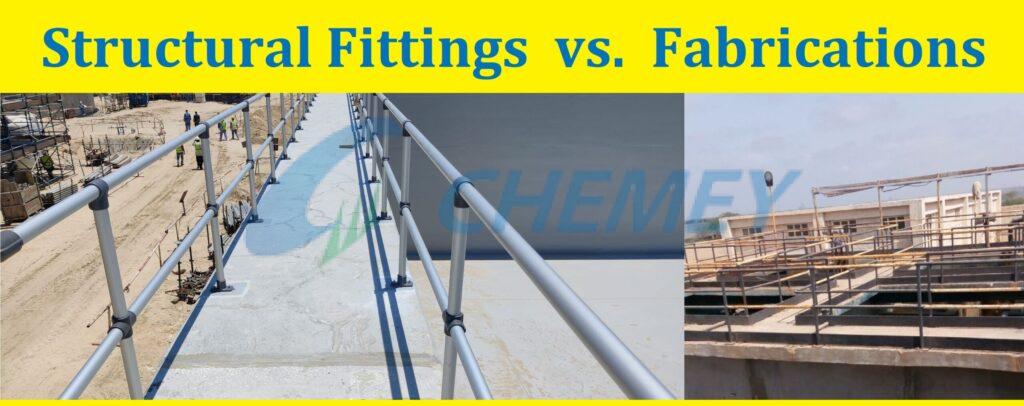
Handrail and guardrail systems play a vital role in providing a safe barrier between people and hazards, so it’s essential that you can always guarantee the performance of the system and that its integrity is maintained many years after installation. Fabricated handrails Many people believe that fabricated handrails offer greater strength and stability and are quick to install as they’re fabricated on-site/off-site and then simply installed into place. While fabricating off-site may be a faster solution for other forms of construction, it’s not the case when it comes to safety barrier systems. Designing a fabricated handrail is not a quick process. Firstly, a detailed site survey is required before drawings can be prepared. Once the design is finalized, sections are then fabricated off-site before the system can be installed on-site by a skilled worker. Installation on-site also requires welding which in turn leads to several health and safety implications, for example special work permits will be required for on-site welding. Fabrication does not guarantee strength and stability. Fabricating a system involves cutting which breaches the metal’s anti-corrosion properties, this is further compromised by the on-site welding. Corrosion properties can be restored by applying zinc rich paint, but this must be applied meticulously otherwise it could merely offer protection to the external welded area only. The tube could still be unprotected internally which will lead to corrosion over time. The problem here is that the corrosion won’t be evident until it is too late which could mean the barrier breaks or collapses when it is supposed to be offering protection at a critical moment. If a fabricated structure is found to be faulty, then damaged sections will need to be cut out and a new section welded. The new section will then need to be prefabricated off-site and then transported to the location. Handrails made from Aluminum Structural fittings An alternative to fabricating handrail and guardrail systems is to construct them with tubular fittings / structural fittings / slip-on fittings. Fittings offer a more flexible and quicker solution. There’s no need for detailed site surveys, a simple layout drawing showing where to place the uprights is all that’s required before construction of the barrier can begin. In addition, systems are easy to install and require no special welding, work permits or skilled labour. Fittings tend to be aluminum structural castings in mill finish / anodized /powder coated along with precoated pipes so systems constructed from modular fittings and pipes are more resilient to corrosion, in some cases lasting up to 10 times longer than fabricated ones. In harsh environments of water treatment or sewage treatment plants and at saline area near sea or Desalination plant, Aluminium structural tubular fittings will provide the highest level of corrosion resistance. Fit it and forget it. No maintenance is required for many years and modular so you can remove an reinstall if required. The Modular handrail solution Fittings have proven their longevity and resistance to the harsh environments at many locations all over the world for many years, e.g. at Water Security Mega Reservoir- PRSP1, Package-A,B,C,D ,Qatar General electricity and Water Corporation, Qatar. Al Madina Al Shamaliya STP, Ministry of Housing Bahrain, Bahrain SWTP-9 Phase 1, MARAFIQ Sewage Treatment Plant project at Jubail, KSA Reliance Jamnagar, Adani Hazira Port, Ultratech Cement, Torrent Pharma, India
Roof Top Safety: Active vs. Passive Fall Protection Systems
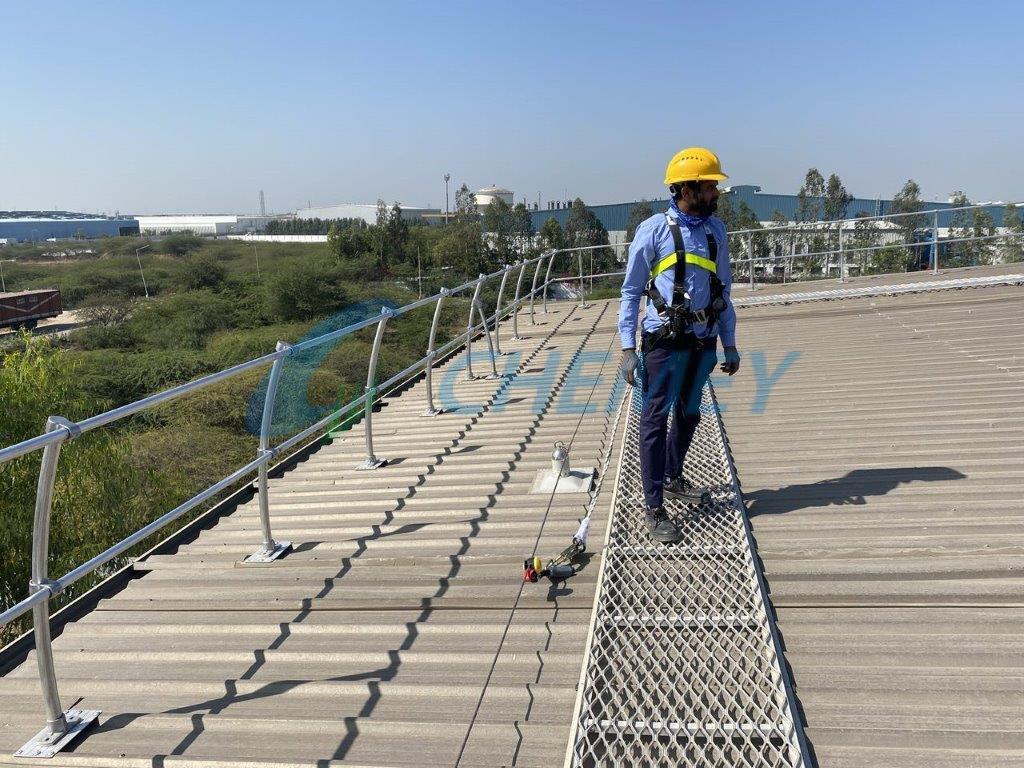
Roof Top Safety: Active vs. Passive Fall Protection Systems Anytime you are tasked to keep someone safe from falling, one decision must be made first. Do I select a Passive System or Active System? Understanding the difference between passive and active fall protection is a great place to start. From there you will be better informed to pursue one path over another. Knowledge is crucial to safety. Passive Systems A Passive System, in short, requires no human interaction to function properly once installed. It has no active mechanisms or moving parts. These tend to be your guardrails and netting. Whether you are “using” a rail or not, it is ready to stop a fall. Netting will catch you regardless of if you are paying attention or not. In other words, there is nothing for you to do to get passive systems to keep you safe. Active Systems Active Systems are the opposite. As you would suspect, active fall protection requires human interaction to keep one safe. This could be an anchor point, horizontal lifeline, vertical lifeline, overhead rigid rail, or anything that requires action from the worker to be safe. Which Should I Use? While working at heights, using an active system requires initiative from the worker. The worker will first need to have a full body safety harness. They will then attach an acceptable lanyard to themselves and the system depending on their scenario. This could be anywhere from a 3’ shock absorbing lanyard to a 30’ self-retracting lifeline. Now assuming that the active system was engineered structurally, up to date with its visual and annual inspections, adequately trained to workers and that a rescue plan is in place, you might be safe. What’s the alternative? Install a guardrail. Of course, OSHA requires training for anyone working at heights. However, you cannot deny the simplicity of Installed Guardrail to prevent someone from falling form Height. We know that there are times when passive systems are not possible. Active systems have their place in this industry. With the knowledge of these two options, you are better equipped to select the best system for your scenario.
Advantages Modular Handrailing has to offer over Steel Handrails?
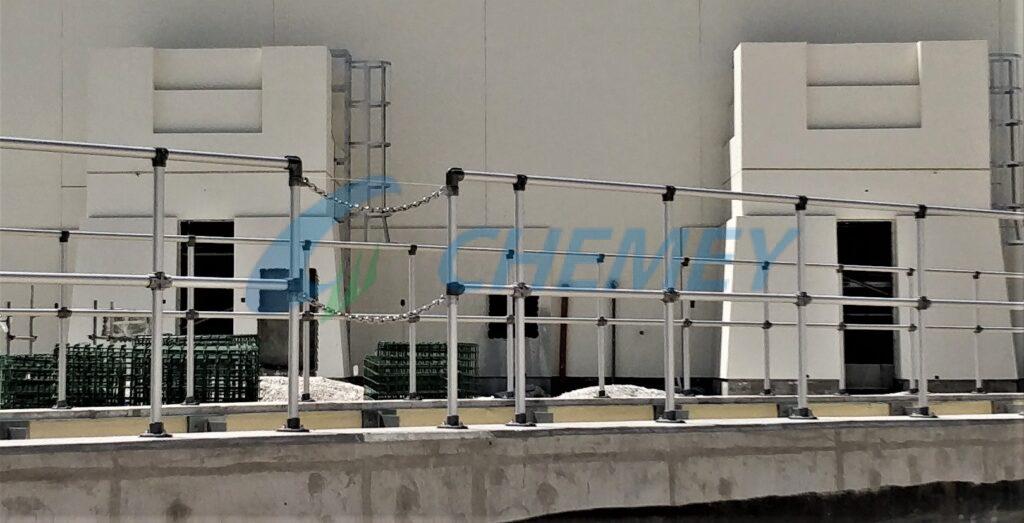
While steel handrail has often been used for decades; it is only because at the time it was the best option available. With the advancement in technology however, steel is not the best option anymore and can pose some serious safety hazards as well as financial burden. The case against steel is quite solid and when it comes to having the safest workplace and the most economical structural solutions, steel just does not make the cut due to high maintenance and early replacement due to corrosion. There are numerous reasons why steel handrail is a fading trend and being replaced with aluminum Modular Safety Handrailing solution. Many plants and other industrial workplaces are making the switch to more durable and modular handrailing of aluminum – EnduRail from Chemey. Why EnduRail®? Aluminum is proved to have Lowest Life Cycle cost when Total Cost of Ownership is considered, since over its entire lifespan, an aluminum structure may prove to be the best option in terms of installation, maintenance, operation, and disposition costs. The case for ALUMINIUM becomes even stronger when the project is in a Highly Corrosive Environment like STP/ETP/Coastal area. (* A Report by Deloitte Inc., with Aluminum Association of Canada) It provides a safe, the most cost effective, reliable, durable, and versatile barrier system to your Railing requirement when you need to protect people, equipment, or your on-site inventory. Advantages of EnduRail Modular Handrailing Easy Installation & Design Long Lasting -No recurring maintenance cost Modular Design – can be removed and reinstall. Anti-Spark – Safe in area pertaining to Spark hazard. No Welding or Special skill or permissions on site Compliance: OSHA 1910.29 / EN 14122-3 EnduRail -all aluminum modular handrail offers a strategic integrated Guard and Safety Railing solutions to meet your safety requirements with absolute confidence for industrial structures, loading docks, walkways, Effluent Treatment Plants, and railings in aggressive coastal environments. To start any handrail project just plan for pipe, fittings, and simple tools. Mark chalk line and base flange positions. Drill anchor hole and start installation by cutting pipes of required size. There is no welding, threading or special permits required when you use Endurail modular handrailing in your projects saving you both time and money. Keep viewing more at Endurail Projects & Advantage – https://youtu.be/9GlOv59vjpo