
Simple Solution for Non-Simple Handrail Projects
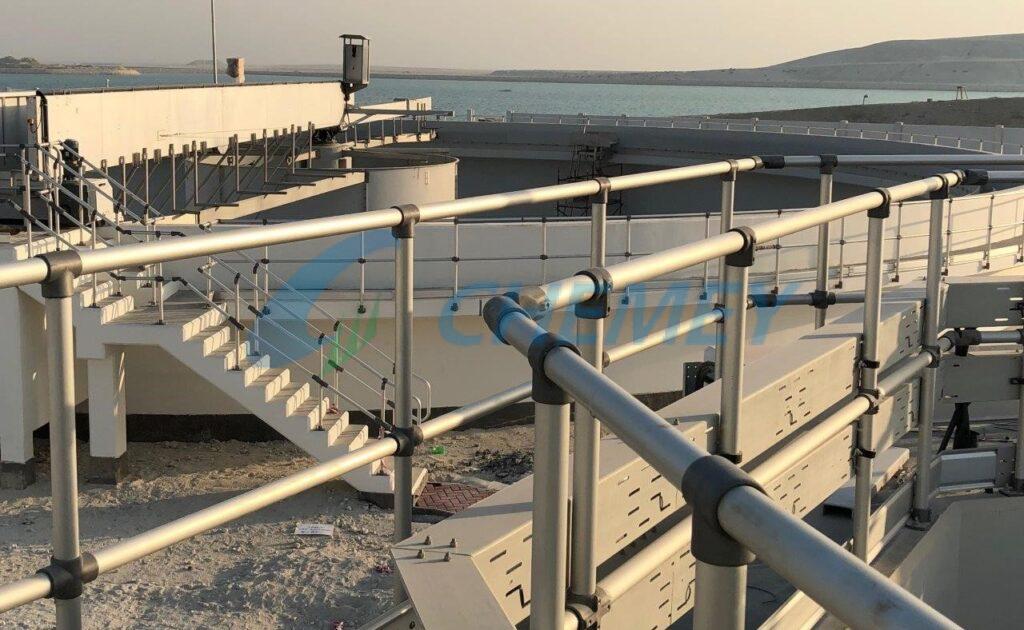
EnduRail Structural pipe fitting, also known as a slip-on pipe fitting, tube clamp fittings, or pipe clamp is used to build structures such as handrails, guardrails, modular barricades, solar panel support, and other types of pipe or tubular structure. Endurail fittings are the best option for DIY enthusiasts for more creative applications such as bench, coffee table, modular GYM, clothing racks, shelves, and building architectural use. Because of the modular design of standard fittings, assembly is easy without welding or threading and only simple hand tools are required. There are endless possibilities to build tubular structures as there are more than 50 types of slip-on pipe fittings combine in many ways to create any custom structure. Fittings used are aluminum alloy castings, and come in many styles such as elbows, tees, crosses, flanges, and adjustable tube clamp fittings. The fittings are not threaded; they simply lock onto the pipe with the supplied hex set screws. The primary advantage of Endurail fittings is its simplicity to use. The fittings slip on the pipe and are usually locked down with a set screw. Using only an allen key when the knurl point set screw is tightened down it locks the fittings into the pipe and a connection equivalent to a weld is created. Do not let its simplicity fool you into thinking the connection is week. Endurail fittings are rated for more than 400 kg of pull-out force. This strength qualifies for use in most industrial applications. Other advantages of using structural pipe fittings are easy installation and reconfigurable design. Since there are no permanent welds in the structure, the set screws of the fittings can simply be loosened, allowing them to be repositioned. The project can be disassembled and stored if needed, or even taken apart with fittings and pipe recycled into a new project. Keep viewing more on structural pipe fittings @ https://youtu.be/j2URpQK-9Jk To start any handrail project just plan for pipe, fittings, and simple tools. Mark chalk line and base flange positions. Drill anchor hole and start installation by cutting pipes of required size. There is no welding, threading or special permits required when you use Endurail modular handrailing in your projects saving you both time and money. Keep viewing more at Endurail Projects & Advantage – https://youtu.be/9GlOv59vjpo
Areas where Industrial Safety Gates are Needed
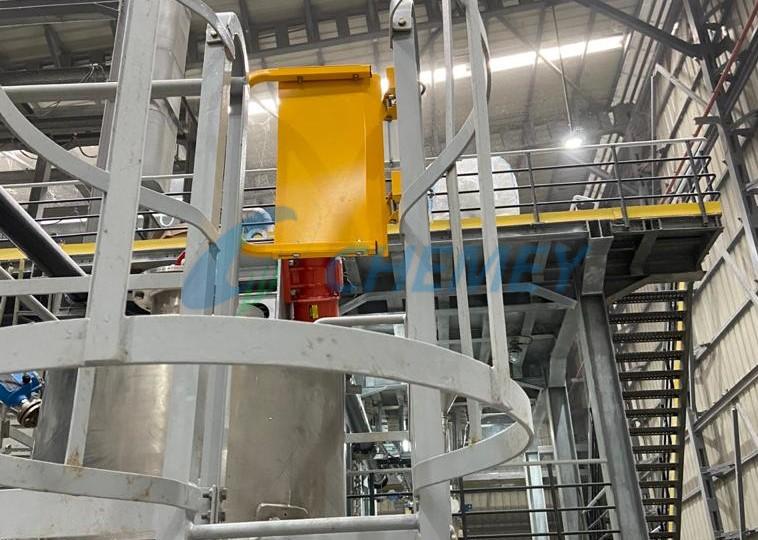
You need to provide total protection for the sake of the person who is working at heights. Industrial self-closing safety gates are a measure of fall protection or barrier protection that protect an area of movement. Here are two areas where an industrial safety gate will help to protect people from fall / injury. Ladder Openings Workers in industries like manufacturing, chemical processing, and construction need safe work environments, but job sites often require them to traverse ladders and raised platforms. Whether on a rooftop or an elevated working platform, a ladder requires a gap in the guardrail that is protecting an edge. Leaving a ladder opening unprotected is leaving the job of fall protection half done. Industrial safety gates are made to attach to the railing or ladder structure so that the gap in the railing is closed with a spring loaded self-closing gate. Pedestrian Walking Areas There are a variety of hazards that employees face when working on a loading dock or in plants where there are motorised vehicles and pedestrians working together. Safe walking areas are often demarcated by the railing. To provide the safest possible environment, the pedestrian needs to know when they are entering and exiting a safe walking area. Industrial self-closing safety gates help to provide an additional level of awareness when exiting and entering a safe walking area. EnduGate self-closing safety gate does not require any human interaction to open or close, but it stays closed when someone is not using it. It also fills in any railing gaps you may have and keeps your job site up to OSHA standards. You also do not have to worry about the barrier staying open when it isn’t supposed to be. It functions as a guardrail when it’s not in use. This minimizes errors and the potential for accidents, fall or injury. EnduGate come preassembled in multiple sizes and finishes, and you can affix them to round or square posts of varying thickness. Reach out to our sales team to understand range of self-closing gates and mounting hinges. We’ll be happy to help you find the right solution for your needs.
Tanker and Bowser Truck Safety Hazards: Do You Know the Risks?
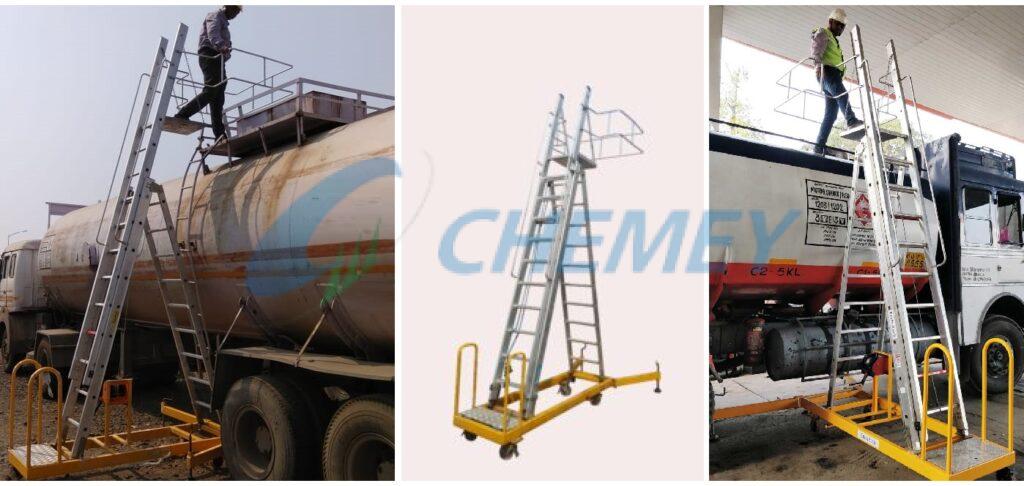
Working on a tanker is a grueling job with large hours and even larger physical demands over the duration of a haul. Certain drivers or operators will be required to climb atop their trailers 4 (four) or more times a day. Speaking with them and hearing some of their stories points out to a few things we have noticed. • Most drivers arrive at their drop-off after a drive of more than 3 hours. • Blood circulation has been shown to cutoff after sitting in a fixed position for only 1 hour. • Most tankers are required to do some form of a freight checklist upon arrival, including climbing a top the of the tanker trailer. • Our studies have shown more than 70% of all falls occur during access or /egress. a) Falling off The Top of The Tank b) Falling While Climbing A Side Ladder All of these can be factors which can lead to a calamitous fall which can not only threaten the safety of your drivers or operators, but in many cases the livelihood of the stakeholder businesses. Reduce this Risk by remaining vigilant and working with experts like Chemey who offers safe access solution – Mobile Tanker access ladder Whether for controlling cargo or taking samples via manholes, access to the top of tanks, access for servicing, repairing, filling, and cleaning needs to be done using access mobile tanker ladders. Chemey Mobile tanker ladder offers salient advantages. • Height adjustable access platform with security cage. • Lightweight, and Stable as a fixed platform, Operable by 1 person. • Easy to Maneuver by hand via chassis with two fixed and two swivel castors. • Different chassis versions available depending on requirements. • Different Height and Platform lengths available to suite your requirements. • Platform surface Serrated aluminium. Portable Tanker Access Ladder System is designed to provide safe access for workers to elevated work areas.
Anchor Points vs. Horizontal Lifelines: What is ideal?
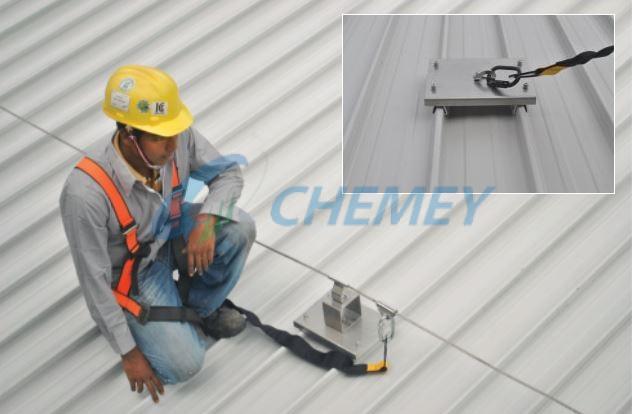
Anchor points and horizontal lifelines are part of Personal Fall Arrest Systems which means that when you use them, a fall must occur. Handrail like EnduRail is the safest solution when installed and do not allow your employee to fall in the first place. However, let’s assume you’ve considered rails already and have determined that they are infeasible. How do you decide between an anchor point and a horizontal lifeline? Anchor points and horizontal lifelines are two ways to achieve the same purpose: protecting your employees from a fall. Each method has its pros and cons, as well as appropriate and inappropriate times for use. Even with professionally installed and used systems, injuries could still occur. In order to determine which will be best for you, you need to fully understand situation. Ask yourself questions such as, How Many People Are on The System? The number of people working at heights is going to be the easiest way to determine which system is to be used. Typically, an anchor point is going to be able to support fewer people (most often, one). However, to protect an entire crew, you would need to install multiple anchor points. Each employee is bound to their one work location. If multiple employees are working, they will most likely need to move around to help co-workers, bring supplies, or just move on to the next section of work. Your best solution in this case is a horizontal lifeline that would allow much more freedom of movement while still protecting employees. Where Do They Have to Work? If your employees need to reach every corner of a surface, installing enough anchor points to achieve this can be a challenge. With may anchor points, you will notice some space is remain unreachable. Also, permanent anchor points may not allow you the advantage of relocation. Most likely, if you have a crew of people working instead of just one or two employees, you will want to consider a horizontal lifeline. With the same roof, total coverage could be achieved by running a horizontal lifeline around the perimeter of the roof or straight across the middle. A horizontal lifeline would require multiple anchor points as well, but once in place, your workers could travel the entire length of the roof and reach, and work flexibility is better. What About Cost and Installation? Also, you may find that properly setting up a mobile anchor point is much simpler than setting up a horizontal lifeline. You may find anchor points economic than the other. Either way, you still need to work on which one is good solutions against budget and ease of use and protection considered. With a little thought and effort, you are probably able to figure out which is right for you – anchor or lifeline, permanent or temporary. Either way, you can keep your workers safe but operational ease matters during your selection of option! Standards to follow at time of selection: BS EN 795 Class C
Modular Aluminum Handrails: High on Endurance, low in Cost of Ownership
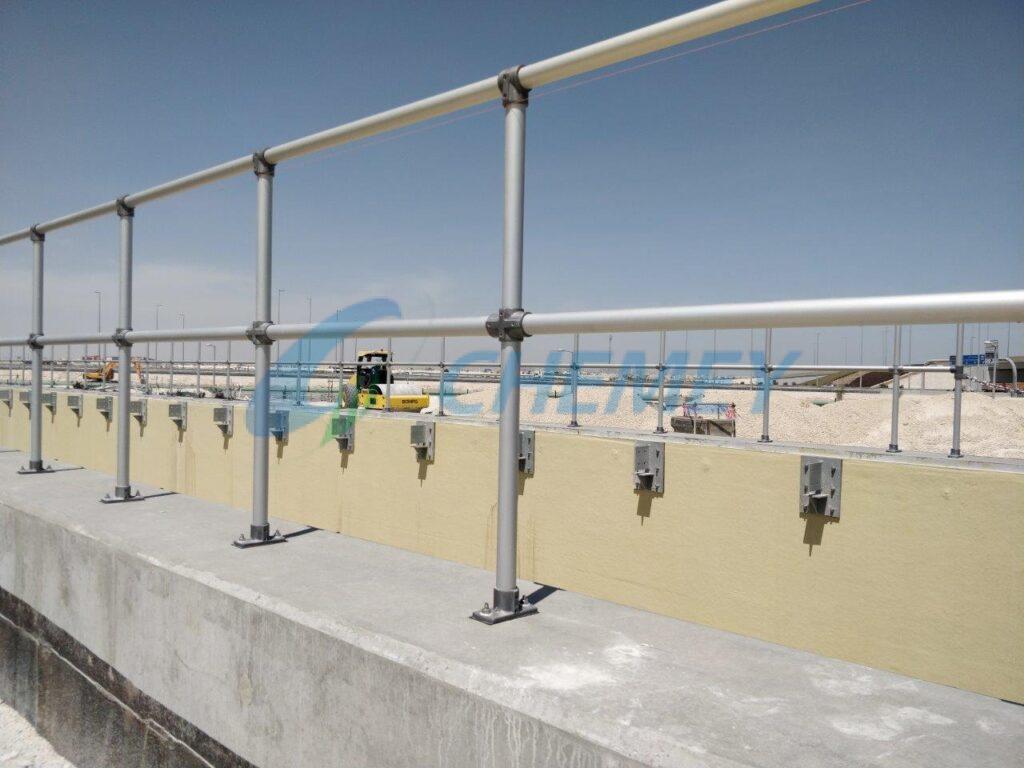
Poor conditions of Handrails Discourage employees to use them as a regular Safety Practice & leads to fatal or serious injuries in case of accidents. The deprived condition of corroded / weak handrails put not only employees at risk but to organizations also. This hazards exacerbate when Handrails are used on Large Water Retaining structures like Water Treatment Plants ( STP / ETP / DeSal ) or within Coastal Area environment or both. Conventional Handrail material of construction –MS/GI Painted handrail tends to corrode fast in an industrial environment . Moreover, Continuous exposure to humidity in typical STP / WTP area & Coastal environment aggravate deteriorations. Expensive coatings can only protect steel from outside but not from inside corrosion. Such corrosion leads to frequent painting & periodic replacement, obviously at higher cost then initially installed. All such incremental cost put together, increases Cost of Ownership of conventional Handrails. Off let introduced Galvanized steel, Stainless Steel delayed such corrosion loss but not completely. FRP / GRP Handrails also faces some technical challenges due to inherent structural properties while SS 316 can derail your plant economics. In such conditions, in terms of corrosion resistance ALUMINUM has performed exceedingly beyond expectations. Be it in coastal area, mild acid & base attacks in STP / WTP or industrial environment. The tough, self-healing natural layer of oxide protect Aluminum metal from such attacks. While versatile mechanical properties of Aluminum provide necessary strength to achieve as Load criteria and compliances laid down in OSHA 1910.23 / EN 14122-3/BS 4592 along with ASTM E 935 & E 985. Looking to above facts , World renowned consultants like OTV SA, MWH -Stantec, Parsons, Hyder, Dorsch Group DC and Government bodies like KAHRAMAA & ASHGHAL (Qatar), MARAFIQ (Kingdom of Saudi Arabia), Haya Waters (Oman), Ministry of Housing (Bahrain) ADSSC (Abu Dhabi) PSA – Singapore, prefers all aluminum & modular handrails fabricated using marine grade Aluminum pipes & Aluminum Structural fittings. (No Welding at Site). While Aluminum Provide long and maintenance free life of handrails, modularity provide ease of erection, dismantle & replace portion within no time & without Hot work application. EnduRail® – Structural Fittings and Handrail System is proud to introduce Aluminum & Modular Handrail concept to India. Our in house end to end capability to design and manufacture EnduRail Structural Fittings with cutting edge casting & finishing facility successfully bring concept for Indian Users. Passionate believer of the ATMA NIRBHAR BHARAT philosophy – Team Chemey achieves International Quality parameters with local prices. We are proud to be supplier of EnduRail to above listed International clients and in India to Aditya Birla Group, Reliance Industries, TAFE, KWSSB, GWSSB,L&T (Oman), SMCC, Suzuki Motors, Owens Corning, Reinhardt Teknik, BEL are few of regular customers.
Creating a Safe Walkway
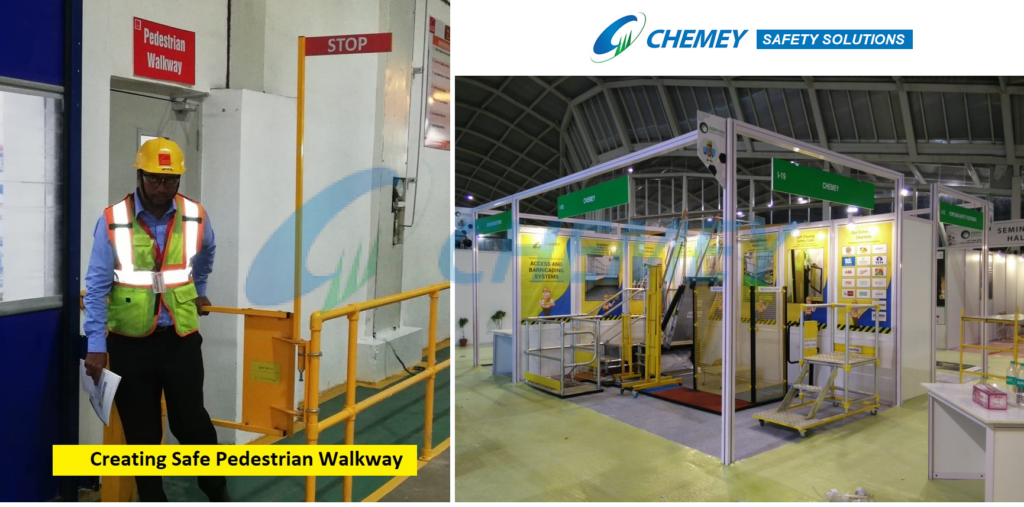
In a physical battle between man vs. machine, the machine is going to win…especially when that machine is a rolling piece of equipment weighing thousands of Kgs. Hoping pedestrians and operators are smart enough to avoid a tragic incident is not an acceptable – or highly effective – safety precaution. What can be done to ensure the safety of pedestrians, the most vulnerable employees in a warehouse. One of the most important things you can do as a warehouse operation manager or safety manager is to control exactly where pedestrians are walking while in your warehouse. Making pedestrian travel paths predictable helps to ensure fork lift operators know where the high foot-traffic areas are. Simply saying, “Stay close to the wall,” or “Don’t cross over there,” is not enough for warehouse labour. There is no substitute for a physical barrier. The first thing you will want to do is designate the painted walkway, physically separating your people and machines using rails. EnduRail ®/ FlexiCade® make it easy for you to erect an OSHA-compliant barrier in varying lengths or configurations. Set time aside to train employees the purpose of the walkways, the hazards they face if they were to travel outside of them, and what the disciplinary action will be if they violate rules (whether as a pedestrian or as an operator). No safety procedure is going to be successful if there are no consequences for those that do not follow it. It is important to note that you will not be able to have walkways everywhere pedestrians need to walk. Just like teaching a child to look both ways before crossing a street, ensure they understand that forklifts have the right of way because they simply may not be able to stop immediately due to load and speed. Also, pedestrians need to always ensure the forklift operator is completely aware of their presence before continuing by making eye contact with the operator. Teach your employees not to place themselves immediately behind any machine or between any machine and a fixed object like a wall. You never know when an operator is going to lose control, hit the accelerator instead of the brake, or back up when they mean to go forward. You still cannot control access to undesignated or more dangerous areas, where your walkway crosses a highly traveled forklift path, you may choose to install single side openable safety gates. These gates force the pedestrian to pause and ensure it is safe to proceed. Currently walking and texting, physically preventing people from wandering into traffic has become a sad necessity. Finally, make sure you know who is wandering through your warehouse. This is your facility. Ensure that anybody who sets foot in it goes home safely when they leave.
Safe Access to Rooftop Solar Installations-Rooftop Railing & Walkway
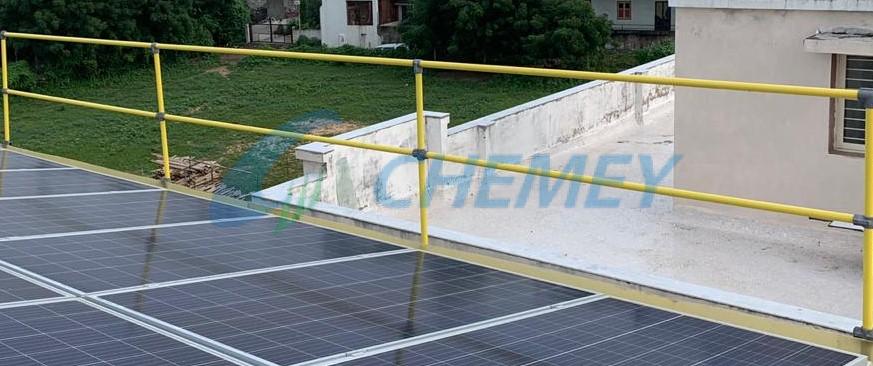
Rooftop Solar Installations are growing, so grows the need of people working on roof and their safety. On a metal roof there are many safety concerns. The metal ribs of standing seam roof and Crest of troughed sheet can cause a significant trip hazard. Additionally, the metal roof may not be designed for people to be walking on any part other than the seam/purlin support. These concerns of Rooftop are taken care by EnduRail®– modular lightweight but strong rooftop railing EnduPlank™k/EnduFloor™ – modular walkway solution Both Systems are principally designed to attach to metal roofs. It connects to the standing seam or troughed roof top using clamps and screws. These sections can easily be installed to form Safe Guardrail andwalkway around rooftop solar panel installations. Find more about EnduRail® and EnduFloor around a roof top solar at www.chemey.com Meeting Your Requirements for Roof Railing When selecting a rooftop railing, you will be burdened with several non-negotiable requirements. Fortunately, EnduRail non-penetrating system for Standing Seam and Penetrating system for Industrial Troughed roof offers many features that covers all concerns. Must Be OSHA Compliant For a roof railing to be effective in preventing a fall, it must be able to resist the loads as laid out in OSHA 1910. OSHA requires that the top rail of the railing must be able to withstand90 kg of point load without failure. EnduRail roof railing exceeds this requirement and has the testing documents to prove it. Always ask for the test documentation. Needs To Navigate Around Obstacles Most roofs were not designed with railing in mind. There are often obstacles on the rooftop that make the installation of railing difficult. EnduRail uses modular fittings and standard pipe that make it easy to navigate obstacles that are located on the rooftop. Aesthetics – Has to Look Good Safety and aesthetics do not have to be mutually exclusive. EnduRail roof railing has plenty of features that make it a great looking solution. Anodized Fittings and Pipe This means that the railing is less visible and blends in better with its surroundings Powder Coat Fittings and Anodized Pipe or All Powder Coating The railing can also be powder coated so that it blends in perfectly with the aesthetics of the building. Continuous Throughout EnduRail has a continuous railing. There are no breaks in the railing, making it look more pleasing and well-integrated into the building environment. Quick Installation A roof railing that can be installed efficiently is another must! EnduRail’s modular design makes assembly rapid without the use of welding or drilling. An Allen key, torque wrench, pipe vise and pipe cutter are all that is needed to install this roof railing. Long Lasting The EnduRail roof railing system is All aluminum. It is the ultimate solution even in corrosive or saline environment. EnduRail systems are built for long lasting durability. Whatever the issues are surrounding roof railing, EnduRail has the solution. The EnduRail railing system is the industry leading roof railing solution because it performs well in all circumstances. Learn More About Why EnduRail Aluminum Railing
THE MOST COMMON WAREHOUSE SAFETY & MEZZANINE FALL HAZARDS
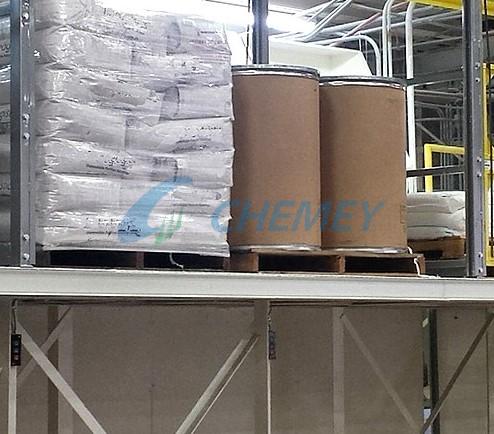
In a warehouse environment, there are many hazards that workers are exposed to as they perform their duties. Many warehouses utilize mezzanines and elevated platforms to store equipment, materials, and supplies since growing upwards is more efficient than expanding the warehouse’s footprint. These platforms represent a potential falling hazard, both for workers on the platform as well as those working below. Warehouse safety procedures are essential to ensure workers are protected from danger. To facilitate this, it’s vital that OSHA approved fall protection devices such as a mezzanine gate, platform gates and guardrails must be in place. What’s more—it’s the OSHA standard 1910.28, for fall Protection, states that: “the employer must ensure that each employee on a walking-working surface with an unprotected side or edge that is 4 feet or more above a lower level shall be protected from falling by guardrail systems, safety net systems, or personal fall arrest systems.” Passive and Active Fall Protection Warehouse safety is a complicated process and it’s up to employers to find the best fall protection for their circumstances. In most cases, it is recommended that mezzanines and other elevated surfaces are protected with passive fall protection such as guardrails and mezzanine safety gates. However, if it is not possible for these devices to be used, active fall protection equipment such as a full body harness and lanyard attached to a secure anchor point are required. Mezzanine and Elevated Work Surface Hazards In many warehouses, mezzanines are used to store goods and equipment in order to free up valuable floor space below. They’re also hazardous for workers due to their height and the potential for workers and equipment to fall. Both workers on the platform as well as anyone beneath it are in danger. For this reason, employers must install mezzanine safety gates and guardrails around all elevated surfaces. These warehouse safety devices protect against: Workers falling over the edge onto the surface below Workers falling on or into machinery Equipment and tools falling over the edge Workers being injured by falling debris, tools, and equipment In addition to a mezzanine gate or other passive fall protection or fall arrest device, workers may also require for fall protection such as a lifeline, harness, and lanyard. While these devices will not necessarily stop a fall from happening, they do limit the distance a worker can fall and thus protect them from serious injury. Elevated Walkways Another common warehouse safety concern is elevated walkways that workers must traverse to get from one section of the warehouse to another. If a worker is carrying tools, equipment, or other materials in their arms, they may not be able to see the walkway’s surface. Likewise, if the walkway isn’t well-lit, it becomes difficult to see any possible trip hazards. In either case, a worker can fall to one side or the other unless there is a sturdy guardrail in place. Additional protection such as a safety line further prevents employees from experiencing a fall from an elevated walkway. Forklifts and Other Equipment Oftentimes, it is necessary to use equipment such as a forklift to place pallets and other materials onto a mezzanine or elevated platform. The same equipment is then used to retrieve these materials when needed. Whenever this occurs, an opening must be maintained so the materials can easily be transferred. To protect workers from falling through this opening, employers must install Pallet Gates or similar fall protection systems. In addition, forklift and other heavy equipment operators must be trained on their safe operation and the proper use of fall safety devices. Ground Level Hazards The majority of the work that’s performed in a warehouse may be at ground level, but that doesn’t mean there aren’t any hazards present. If tools, equipment, machinery, materials, or debris fall from a mezzanine, platform, or elevated walkway, it could strike a person below and cause serious injury. Guardrails, platform gates, a mezzanine gate, and netting help prevent these mishaps and keep workers safe. Additional protection such as a hard hat, safety goggles, and warning signs further ensure the safety of workers at ground level. Loading Dock Hazards There are a variety of hazards that employees face when working on a loading dock. For this reason, workers need to be diligent and pay close attention to everything that’s going on around them. They need to be aware of any forklifts and other material handling equipment that’s being used on the loading dock. Some of the most common loading dock hazards include: Slippery, wet, or oily surfaces Broken or uneven surfaces Unprotected dock edges Unsecured dock plates Forklifts and other vehicles Eliminating these issues involves keeping loading dock floors clean and free of debris, installing safety railings and safety gates painting brightly colored warning strips along edges, and incorporating warning lights and sirens workers can easily see and hear. Authorized Personnel Only Even if an employer provides their warehouse workers with personal fall safety devices, has installed mezzanine safety gates, guardrails, and other passive fall protection, it may not be enough. Restricting access to dangerous mezzanine areas to authorized personnel is imperative. These employees will understand how dangerous the situation can be and are trained to safely perform their jobs, while an untrained employee may not. Install safety gates and other barriers to deter unauthorized entry and to ensure only authorized individuals enter these areas. OSHA’s requirements for warehouse safety are strict and any facility that fails to comply with the rules will face stiff fines and other punishments. But compliance isn’t the only reason to provide your warehouse workers with the fall protection devices they need to work safely. When safety is a priority for leadership, it becomes part of the company culture and workers take on a safety-first mentality and encourage it in others. And fewer injuries due to falls improves the company’s image and increases the bottom line by reducing expenses associated with these preventable accidents. Safe Access Solution that Lasts for Decades Worker safety should be top priority in any industry.
Safe Access Solution that Lasts for Decades
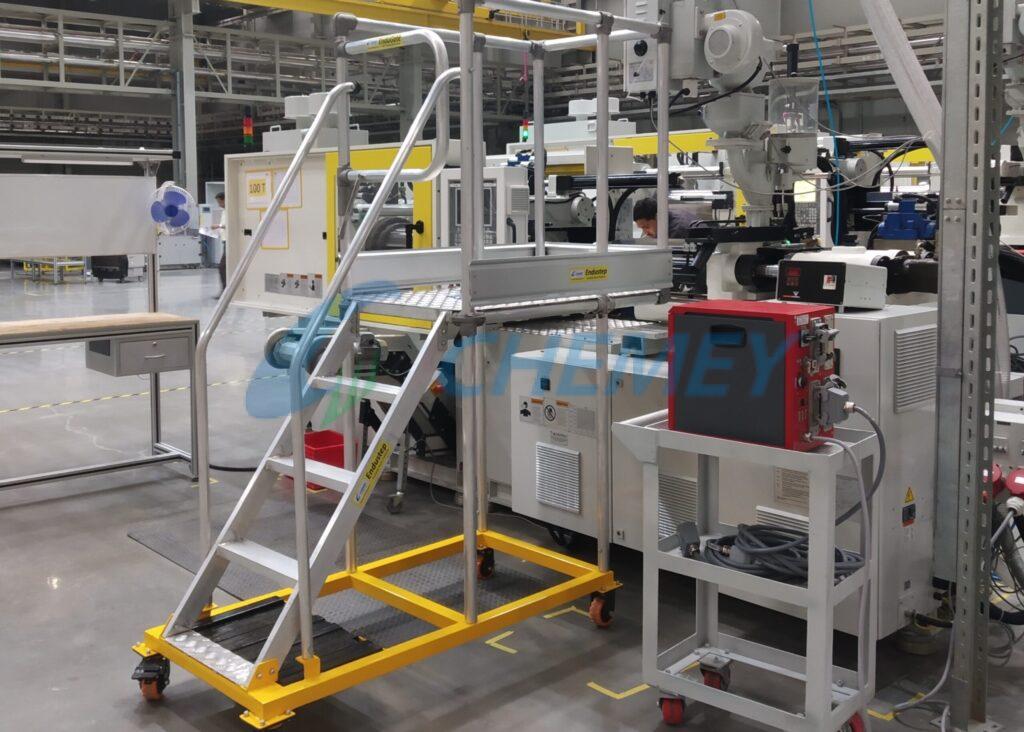
There are many types of work platforms: aerial work platforms (such as scissor lifts), scaffolding, or prefabricated, permanently installed platforms. Which one you choose to use depends on the type of work you plan on doing and the duration of that work. These platforms provide safe, easy access as well as ergonomic positioning for the task at hand. So, what do you need to know about them? What is Required? Information on work platforms is going to be found in multiple locations within 29 CFR 1910 Subpart D (Walking and Working Platforms), but there are a few general requirements that hold true: Because we are discussing General Industry situations, handrails will be required at 4 feet. This is the height at which fall protection is required in General Industry. The rail must be 1070 mm high; a mid-rail is needed as well as a minimum 100 mm toe-board. If it takes four or more steps to access the platform, the steps must have rails as well. Access openings must be offset so that somebody cannot step directly into them or must be protected by gates. EnduStep Stationery and Mobile work platforms are designed and engineered for superior durability in both indoor and outdoor environments considering above. It is structured from long-lasting Aluminum Structural fittings and aluminum pipe extrusions. Aluminum platform structure is modular and of non-corrosive aluminum metal, remains protected and maintenance-free for decades. EnduStep access platforms are custom built and can be designed up to 3m in height. When higher access is required, Aluminum Mobile scaffold – EnduFold platform is offered with the addition of stabilizers – an extra support arm. Aluminum or MS Powder coated wide stable base for Corrosion Resistance Powder-coating/Anodising Available for Extra Protection Engineered to Last, Even in Wet Environments Improve Productivity with Passive Safety Control Railing & Safety Swing Gate Surrounds Platform, Preventing Serious Falls Cantilever Platforms possible for safe access While there are many more regulations that apply to a platform’s design and use, these four basics should at least get you going. Different Platforms, Different Uses Platforms are often designed, or customized, with a purpose in mind. For instance, you may have installed a platform so that a machine operator could work with the controls at a proper height, rather than having to reach overhead. You may also need to access higher sections of this same machine for maintenance purposes. Just because you have a platform in place though, doesn’t mean that it can serve every purpose. While the platform may be at a perfect height for operating the equipment, using it to access higher areas could cause you to have to climb rails or perform other unsafe actions. Make sure that the platform you are using is designed for the purpose you are using it. Be Aware of the Surface on Which You Are Working If your work platform is a fixed, non-adjustable platform, then the only surface consideration you need to be concerned with is that it is clean, free of debris or spills, and is not broken or compromised in any way. But, if your platform can be moved, you also need to consider the surface below your work platform. Some platforms can be adjusted asymmetrically to account for uneven surfaces. Others are provided with large wheels so that they can be rolled over grating or other holes in the floor. Without the safeguards mentioned, uneven surfaces or floor openings can be disastrous. Make sure your platform is equipped with whatever is necessary to keep it level and stable. Versatility If you are in the stage of setting up a work platform, you’ve got a lot of opportunities to make the platform as versatile as possible. Look to the future now, so that you can be prepared for possible requirement and safety. Will the task always be done this way or in this location? Will maintenance need to be performed that could require additional access? Is the platform strong enough, not just for what I intend to place on it now, but what I will need to place on it in the future? So, take the time to consider all future applications. Once you have, you can build the versatility right into your design. Mobile scaffolding and aerial lifts exist because you may need a quick, short-term solution to a problem, especially in the dynamic world of construction. However, when you are procuring a long-term work platform, do not rush it. Take the time to understand what is required for the present and the future, to train your employees in its use, and to fully understand not only its uses but its limitations. Done right, work platforms can save you quite a bit of money and countless injuries. Our EnduStep Access Platforms allow safe access to areas where off the shelf fabricated platforms or other systems are not appropriate. Have Any Questions About Mobile Work Platform-EnduStep? Contact Us
OSHA does not allow chains to be used as fall protection anymore
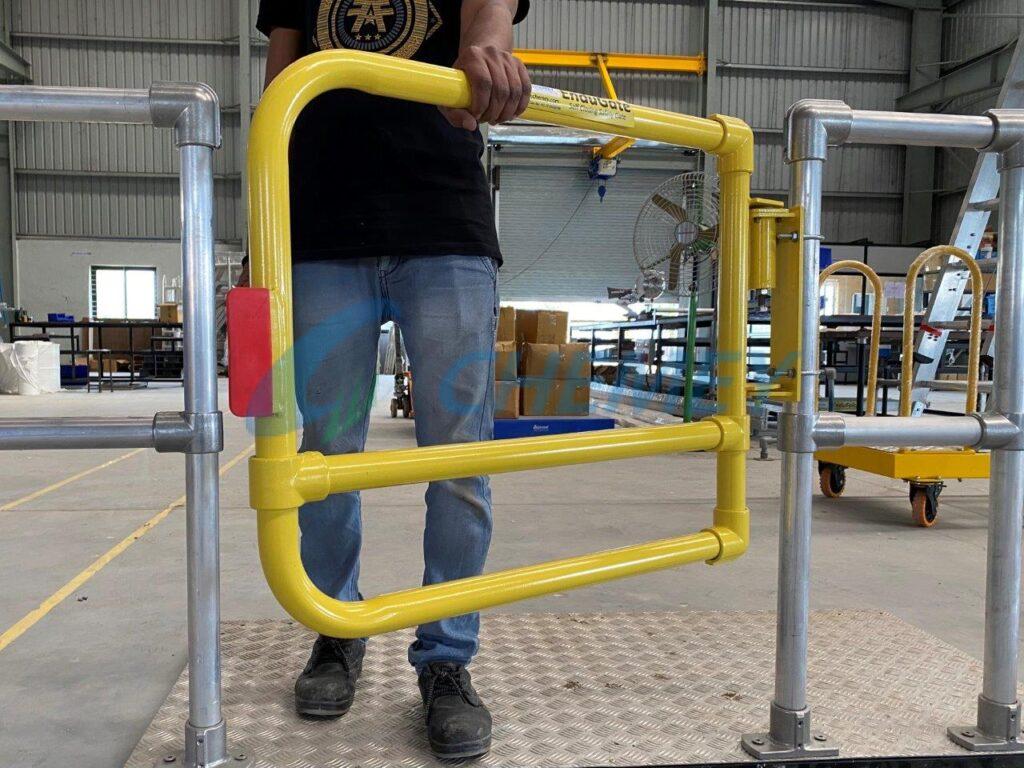
However, due to this change in OSHA’s code, safety gates have become the go-to option for fall protection. That being the case, we wanted to give in-depth look into the mechanics of the safety gate and why they are a great option for fall protection on ladders or work platforms. What Makes Up A Safety Gate? Clamp On Design Each safety gate comes with u-bolt hardware kit. This allows the gate to attach to existing railings and ladders with basic tools. No drilling or welding required on site. With its unique design, the Gate bracket will fit over any round or square tube up to 50 mm diameter. Meaning it can easily attach to most railings and ladders. In a scenario that you have MS flat / angle or a wall, instead of using the u-bolt kit simply bolt the gate directly to the vertical surface. We can make available special clamps for custom fitment also. Self-Closing Hinge Because the opening to your ladder is an immediate fall hazard, you need to protect that opening the moment you walk through. This is where the self-closing hinge becomes your best friend. After you have tensioned the hinge correctly, you can easily use your hand or body to push your way through the opening. Once through, that gate closes, and you are protected from the edge. Works In Either Orientation There is clearly a right direction when installing the safety gate. It most easily determined by the sticker. However, if you’d prefer the hinge being on the other side of the opening, you can flip the gate around for installation. Yes, in Yellow gate the hinge is designed to work in both directions. Adjustable Tension (Optional) In some cases, you will want a tighter or more lose tension in your hinge. Instead of being stuck with the factory positioned tension, you can match the tension to your scenario. It’s simple to adjust as well. Use a pair of wrenches to get your desired tension quickly. (Specify Opening Direction of gate w.r.t Post Position- Left hand or Right-hand Opening) Why Doesn’t It Have A Latch? The reason we do not include a latch on the safety gate is two-fold: Safety and Function. Safety gates are used in areas where you are at height, typically climbing on a ladder or working of platform at height. Being at height, you are already at high risk of falling. Adding a mechanism to the gate that you would need to fidget with to gain access to safety negates its purpose. Imagine you are 30’ off the ground, the wind is howling, you have tools strapped to your belt, and now need to exit the ladder. Would you rather just push and have the gate open or would you instead want to pause, take your hands off the ladder to open a latch, then walk through? The self-closing hinge is specific to its function and purpose. Latches require human interaction. Self-closing hinges do not. This is a safety device designed to save your life in a risky situation. The more we can reduce human interaction the safer you will be. Have Any Questions About Safety Gates? Contact US